Team Wideopenmag’s Chris Hutchens talks us through what he learned on his 16 hours of darkness charity ride.
Here’s how sixteen hours in the saddle for Mind and Scottish Mountain rescue went for Team Wideopenmag’s Chris Hutchens.
Well 2020 has been a tough old year and 16 hours in the saddle was the perfect time to reflect on that, or so you’d think. With a clear sky and the sun dropping quickly I left the comforts of my van to endure on a relentless Dusk till Dawn attempt around the trails in Ashton Court…on a gravel bike. This ride would teach me a lot and here’s how it unfolded as I aimed to fundraise for two amazing charities – Mind and Scottish Mountain Rescue.
The Challenge – The Devil Lap
I’d considered and planned a couple of options bouncing ideas off of friends for weeks and with COVID restrictions limiting travel I settled on a local Dusk till Dawn challenge. Earlier in the summer on a warm and utterly delightful day I rode Dawn till Dusk from Bristol into and around the Forest of Dean clocking up 200km on my Nukeproof Reactor ST. It was a big ride but slow paced, warm and dry plus it was in the daylight for most of it. I needed something suitably daft to warrant any fundraising efforts so I settled on riding as many laps as possible overnight at Asthon Court. It kept me in the travel zone and was relatable to anyone who had ridden this 6.66km (as it came out when I plotted it on Strava) mountain bike loop. Then to make it harder….do it on my Gravel bike. Excellent. The Devil Lap was created.
What I learned from 16 hours in the saddle.
Over the course of the night I clocked up 216km around the loop and just shy of 3000m elevation gain totalling 32 laps of the Ashton Court trail. My average HR for the 16 hours was 131bpm, peaking at 170 bpm with an average speed of 14.9km/h. While some of the trail was a blast every lap, mainly where there had been resurfacing over the last few years, there were sections that I would grit my teeth for as I vibrated through and braced for a shudder. These sorts of events are a great way to learn so here’s some lessons I wanted to share.
Preparation
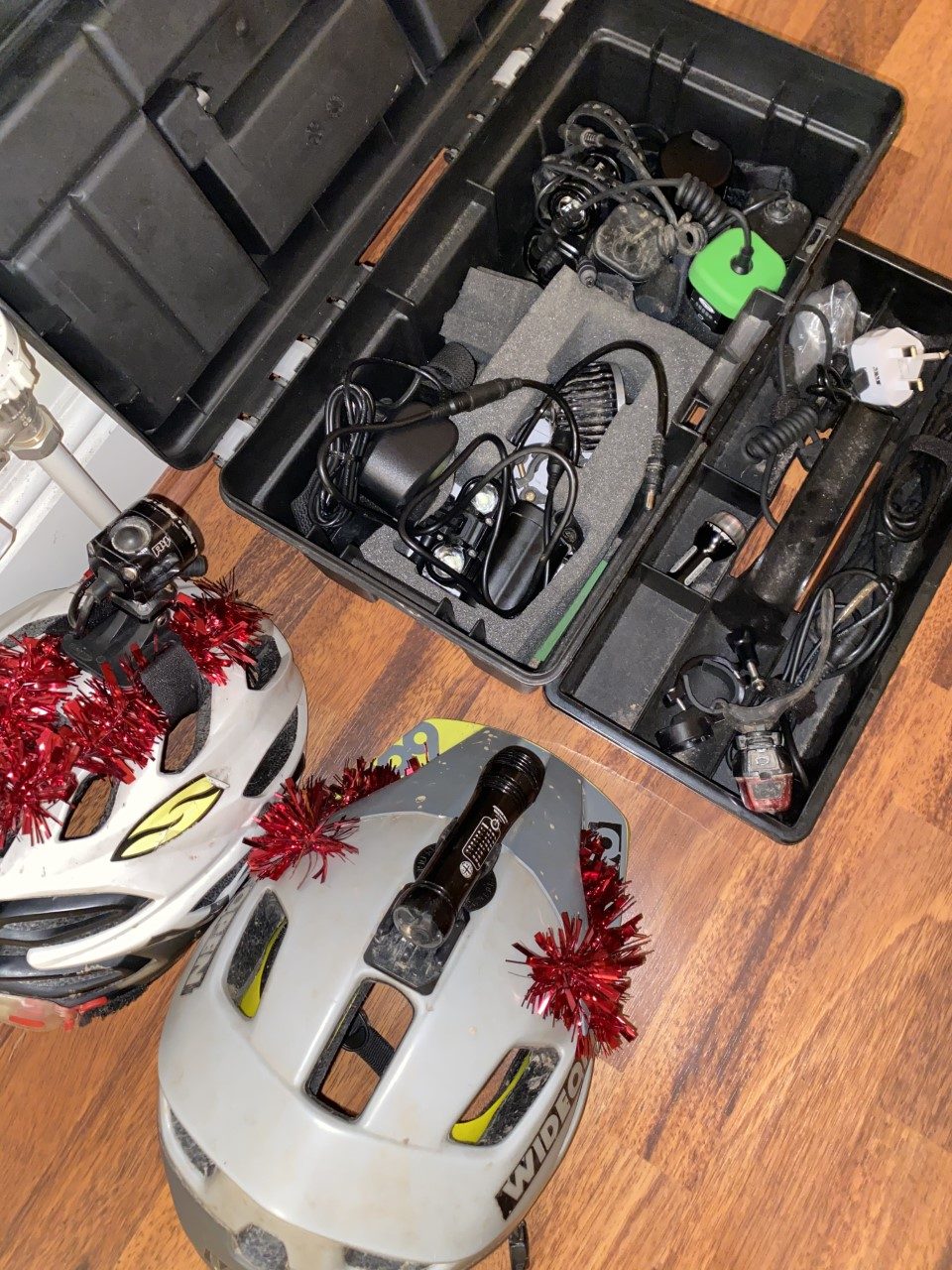
I only decided on this challenge a couple of weeks before but this gave me enough time to prepare for the night. Without any specific training I had a good base load of miles in ( nearly 4000km and over 90000m of elevation gain according to Strava in 2020) and I knew I could ride for the duration. This was a slightly different challenge though and I’d never ridden my Gravel bike for this duration on such rough terrain. Preparing the bike was key and over the last few months I’d been picking up some good tips from friends on how the perfect gravel bike set up.
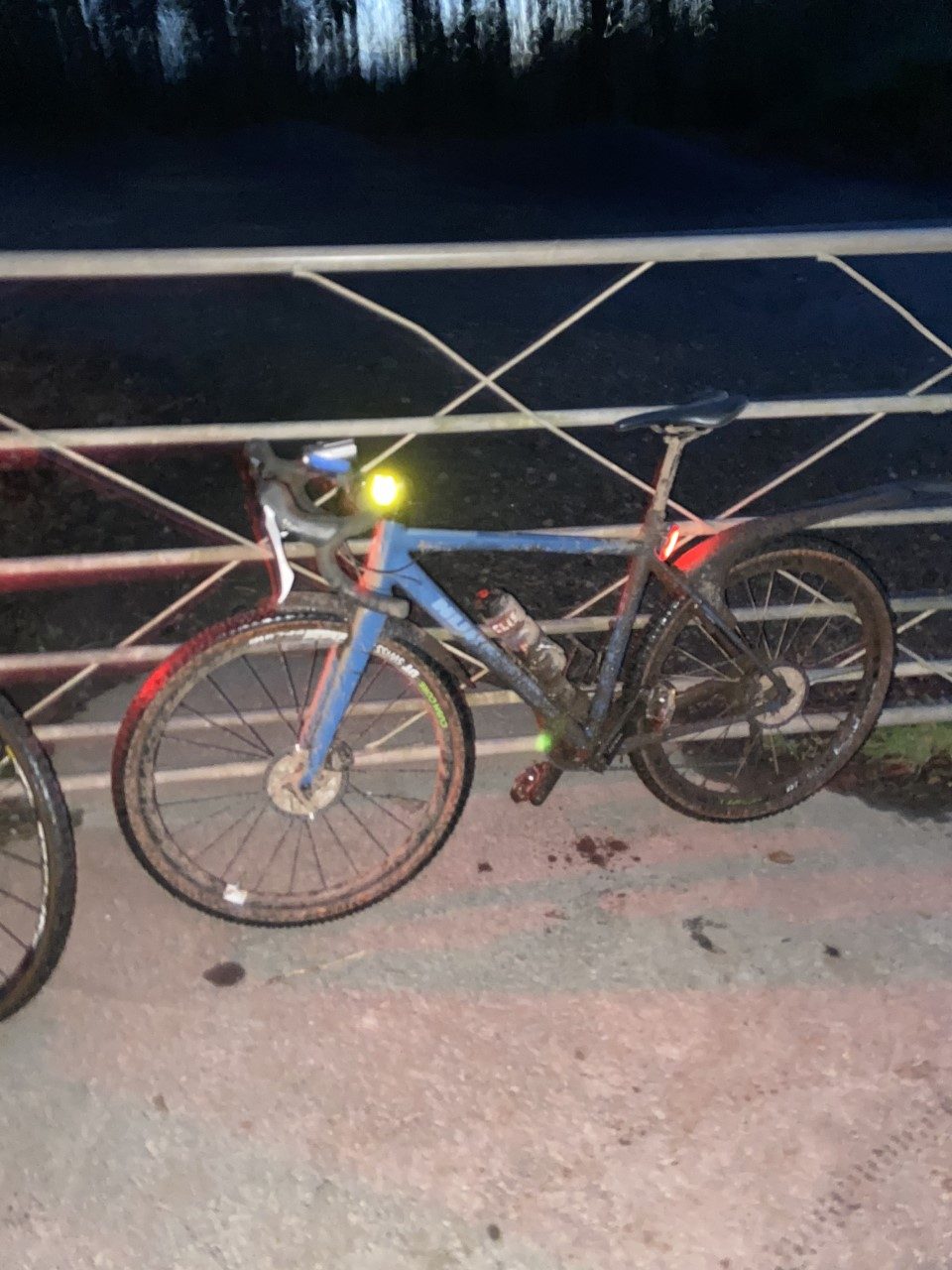
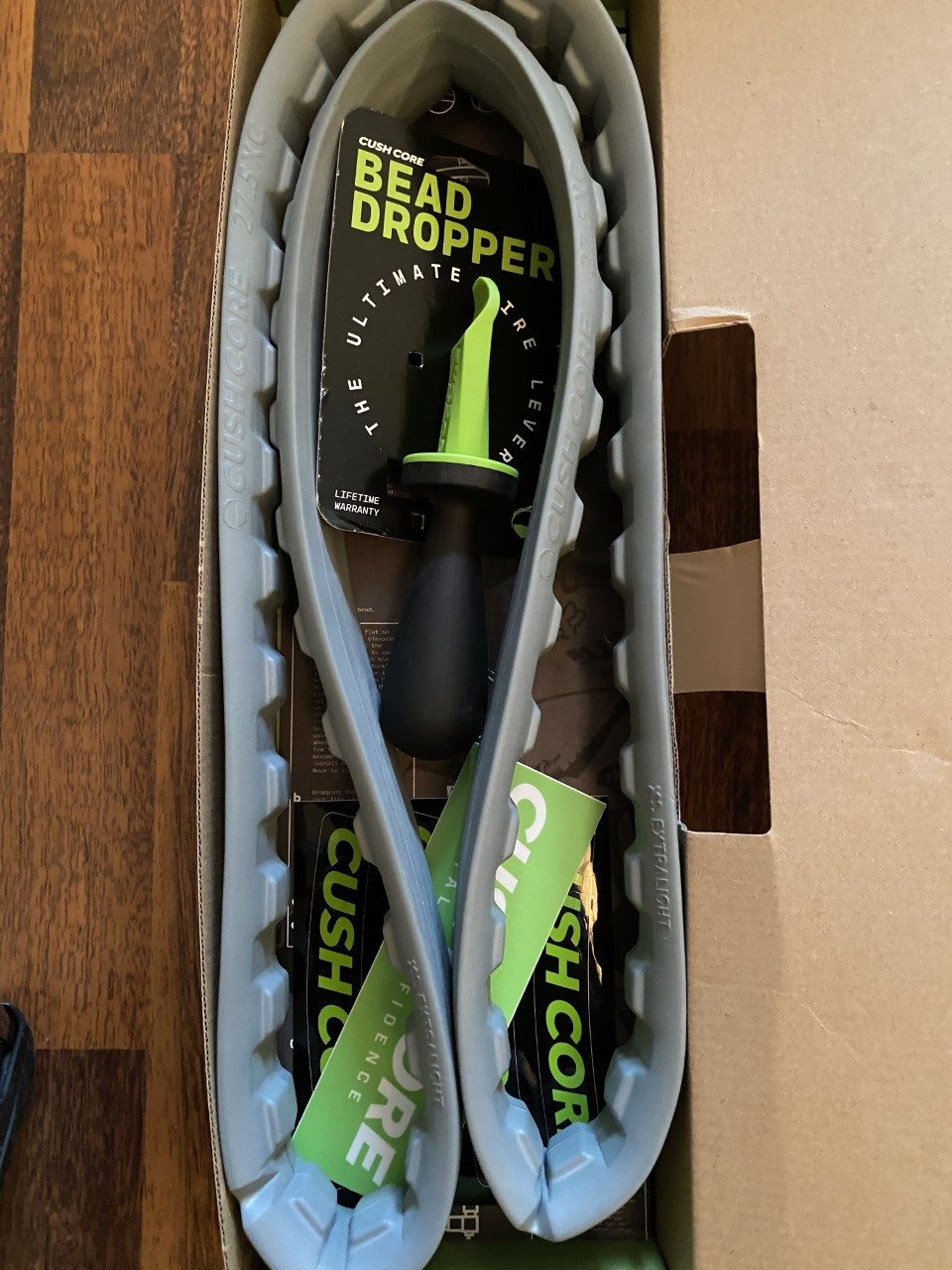
I was riding the Nukeproof Digger which I’d bought early in Lockdown 1.0 but it needed some modifications for the night. After a practice lap a week or two before I wanted to see how a lap would feel, how long it would take and get a gauge for the pace. What I learned from this was that it was rough. My hands hurt after one lap. I did begin to worry at this point. Then I remembered some good advice from Trev Worsey. Inserts! To help with the rough terrain I wanted to run as low a tyre pressure as possible but also protect the rims. Cushcore was to be a saving grace. I got these fitted and dropped my pressures to 28psi front and 29psi rear…the 1 PSI difference made all the difference. From previously riding 32psi there was a remarkable difference in drop 3-4 psi out of the tyres. This actually saved me a few times as I burped the rear tyre pushing into turns in the early stages dropping to 14psi.
The other additions to the bike I made were fitting front and rear gravel hugger mudguards (life savers) and two bottle cages. These all added up to a good set-up for the ride maximising comforts and the ability to have different drinks on board at any one time.
Nutrition
I’ve learned a lot over the years about nutrition – from the Strathpuffer, 10 under the Ben and World Enduros. Going into this event I also had some great advice from Matt Jones (not the slopestyle dude but the endurance dude). He’s got some great tales on his site here.
A few key things for me:
- I wanted to ensure I kept my salt levels up and stayed hydrated, avoiding cramp and maximising recovery after
- Try to avoid caffeine and sweets until the last moment
- Eating regularly and on the go as much as possible
- Get protein and carbs on board whenever I could
- Avoiding high fat foods – I caved at 14 hours and had a mince pie
- Eat real food and warm where possible
I achieved this pretty well through some good food prep. Notably this did take me most of the previous Sunday to get ready. I opted for sweet potato, chorizo and chicken soup as my main food source. This had everything I needed in it. Carbs, protein, salts and well the chorizo just made it taste incredible. I didn’t go heavy on this to avoid too much fat in there. On top of this I had warm pizza slices for my first real food stop about 2.5 hours in and then some hot tea a couple of times in the depths of the night when temperatures dropped.
In addition to this I continually nibbled on a variety of bars and snacks I made which were oat/date and nut based. Some had a little added protein in (egg) and melted chocolate to sweeten it up. These really kept me going.
Finally the golden tip from Matt was to have a warm drink with you. Hot water in the bottle on the bike was a dream! This helped reduce the energy needed for the body to heat it up in your stomach and also helps keep the core temperature high when the outside temperature drops, which it did when I couldn’t feel my toes as a result of the wet ground in places.
Focus and Structure
I thought I would have some thinking time around the lap and even have a chance to listen to some tunes. This wasn’t the case. What really tired me was the need to stay focused for the full lap. I only had a few lapses in concentration when trying to see what my HR was doing and how far I’d ridden. These quickly resulted in some near off trail excursions but thankfully I avoided that and stayed on the narrow track. Maintaining this focus was key though and by breaking the night down into chunks of 2-3 lap laps helped me to keep this up.
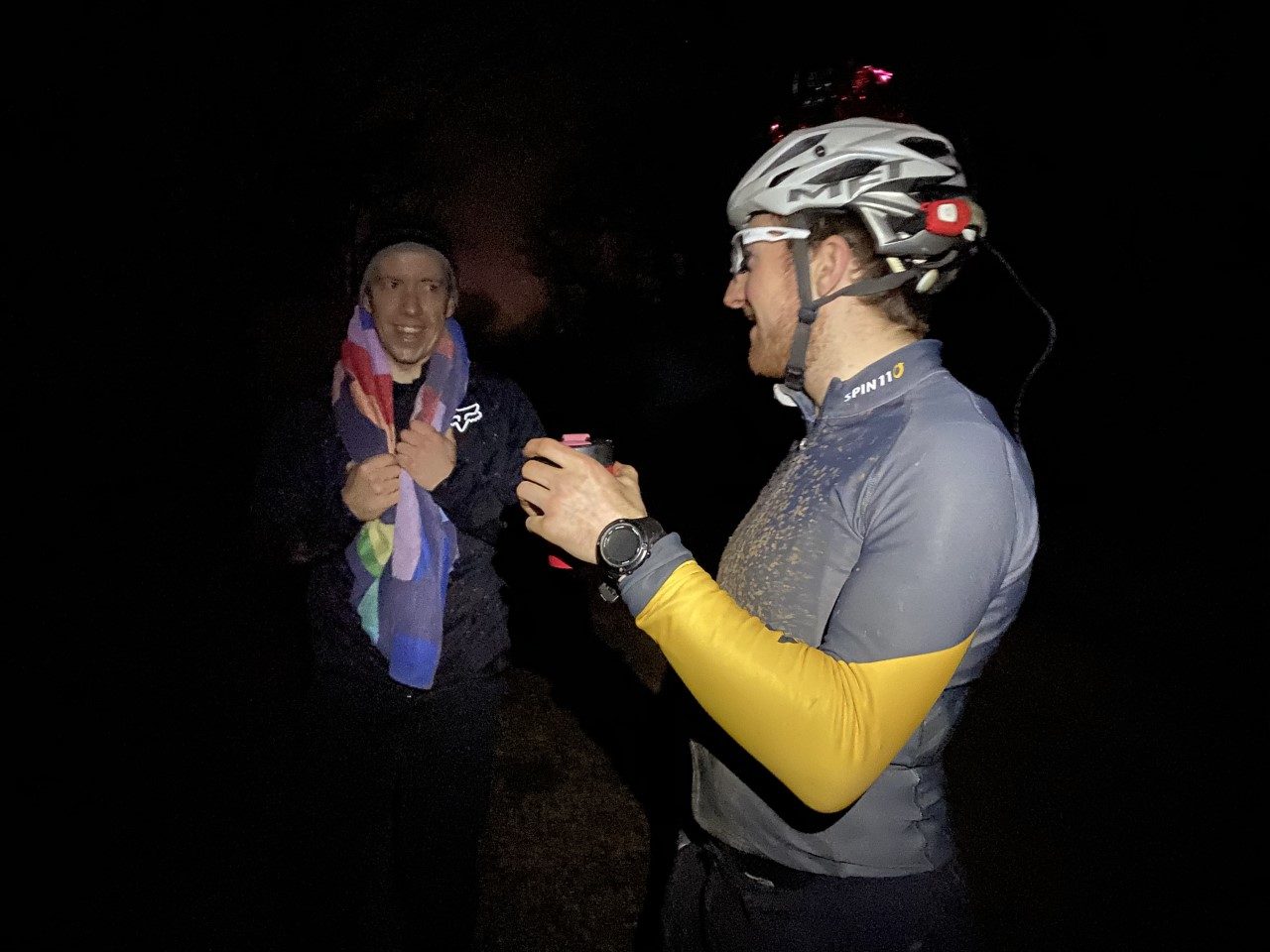
This structure worked well and even just a 2 minute water and food stop every 1-1.5 hours really paid off and helped me get to the end of the 16 hours while keeping the spirits high. Longer breaks for proper food were also essential to being better out on the course. It also helped that I had some awesome friends join me for periods of the ride meaning I was only riding solo for around 5-6 hour.
Support
The support has been amazing both on the run up, during and after this ride but I have to credit those who helped directly with the challenge and emphasise the importance of a team and support network. I think this is pretty relevant to the current circumstances we all find ourselves in right now.
Firstly my flatmate Kris supported me all night preparing warm soup and some hot drinks while trying to get 60-90 minute sleep cycles. I don’t think he really got that many! Thanks!
Then those who joined me to ride. This was a real winner and broke the night up well. The early am solo shifts were definitely the hardest but knowing that I would have someone join me after 4-5 laps helped me bashed out another lap here and there and allowed me to set little targets over the night. Thanks to George, Martyn, Colin, Ben, Ben and Jon for riding during the challenge.
Also a massive shout out to Charlotte and Jamie for being there at the end with coffee and cookies.
Keeping it smooth
The racer in me was pretty evident in the early stages. I was all about the line, carrying good exit speed and pumping the trail. As the night went on I had to change some of my lines as what were initially small bumps exponentially grew and felt bigger and bigger. The load going through my upper body and the cumulative fatigue was becoming more and more evident.
I began to change my riding lines in places opting for the smoothest line, always avoiding puddles and trying to conserve energy. I had to be lazy, smooth and find a flow. This came the more I rode and while it was impossible to find a smooth line I searched hard all night to limit the impacts and vibrations through the bike into my upper body and arms. I’m still hurting three days on.
The Charities
Over the last couple of years I’ve supported various charities which I believe are doing some really valuable work by taking on a random challenge which would push me both physically and mentally. I’ll see how long that continues but for 2020 I wanted to shine a light on both Mind, a mental health charity, and Scottish Mountain Rescue. Both have been vital during the current COVID pandemic providing support and advice and rescuing individuals who have found themselves in difficulty in the mountains.
You can get some great tips from Mind in the link below on the run up to Christmas and if you’re struggling with the isolation, change in circumstances, work and family stresses then reach out or have a read. We’re all feeling the pressures differently.
Scottish Mountain Rescue has just launched their #ThinkWINTER campaign which aims to educate people into being prepared before they head to the hills. The Scottish Mountains, and those in the Lakes, Snowdonia and others can be ferocious at the best of times but when you add into that snow, wind, ice and lower temperatures they can be real killers.
Over the summer in the UK mountain rescue teams have seen record call out numbers as many escape the cities and connect with nature. Now’s the perfect time to upskill yourself and learn more about how to look after yourself in the hills whether you’re on bike or foot… or even skis. For some great hints and tips then check out the Mountain Rescue advice below. This is great advice whether you’re in Scotland or not.