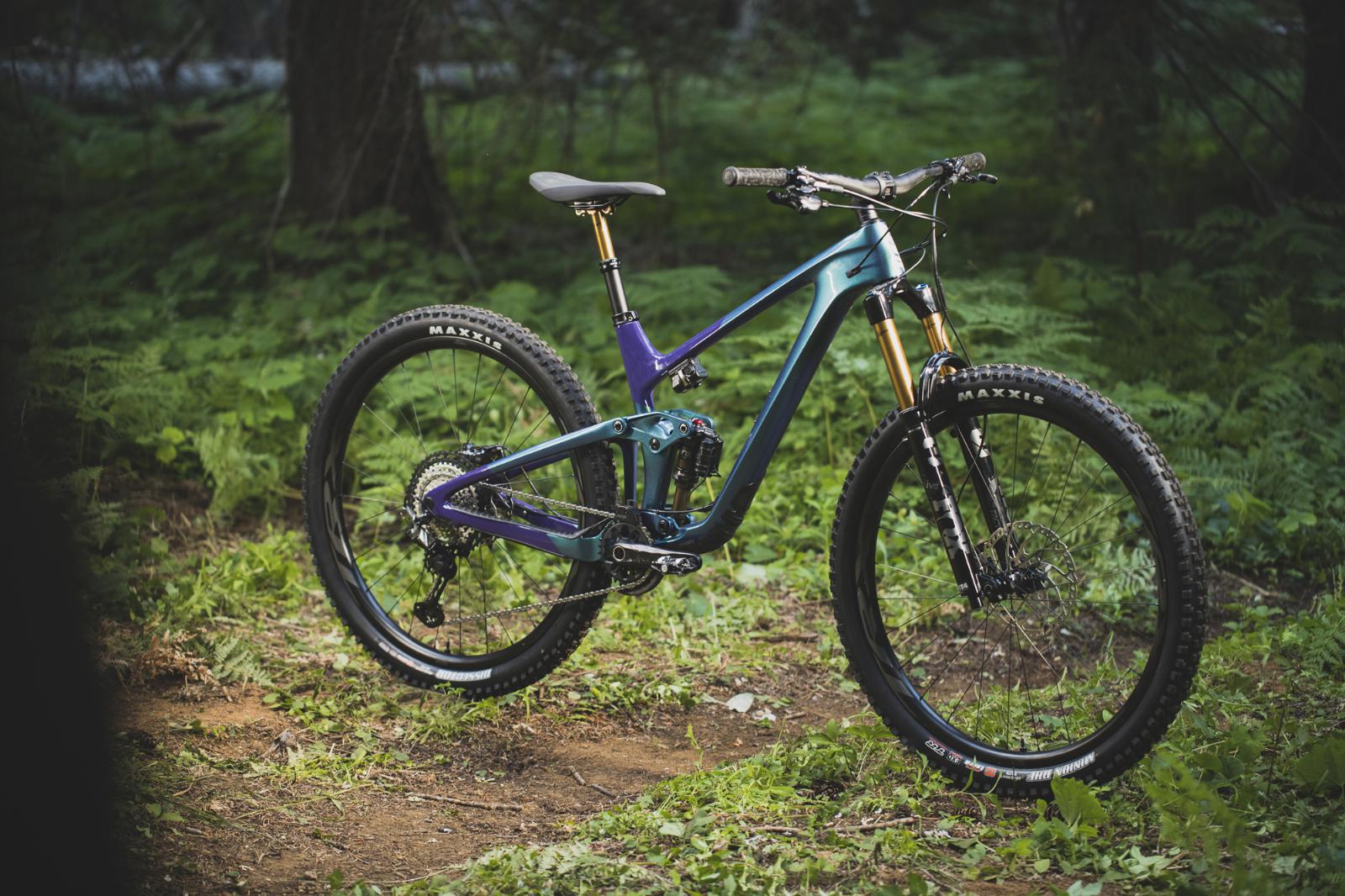
Giant recently launched their new Trance X Pro 29, designed to be a one bike to rule them all machine, sitting between the standard Trance and the Reign.
Building on the Trance Advanced Pro 29, the Trance X gains more travel via a trunnion-mounted shock, a flip chip and a 150mm fork out front.
Pete had a chat with Giant’s product category manager, Jan Cees Schellenbach, about how the Trance X Pro 29 came about.

What was the impetus behind the Trance X Pro 29?
We were missing a true “do it all” 29” trail bike in our range.
Once you had made that decision, what happens next?
We begin by making prototypes based on version 1 geometry, we then get feedback from test riders and make changes, if needed, for the version 2 prototype.
Who is involved in that process and what do they do?
Our engineering team in Taiwan. Lead engineer Simon I, design leader Erik Klemm and R&D manager Joe Staub handle the physical product development. Andrew Juskaitis handles marketing, then we have Adam Craig, Colin Bailey (both part of our GFORT team) Joe Staub, Andrew Juskaitis again, and myself JC Schellenbach as test riders. I am also product category manager.


How much of the development process is done in-house?
Pretty much all of it is done in-house.
What did you know you did and didn’t want to do with the new bike?
It had to be a ‘quiver killer’. One bike that does it all. It should not be a 1 trick pony. Versatility was key.
Is it important to keep the Giant frame layout with new models?
Due to our Maestro system there are some elements on the bike that we cannot change. Pivot locations are important. We believe Maestro is the best suspension system and we want to have the best working suspension.

Do you try and keep frame sizing consistent with the range, or do you use new bikes to introduce new sizing?
Frame sizing is pretty consistent, especially seat tube length but we obviously adjust reach for each specific platform.

How did you nail down the geometry?
We worked on the V1 geometry file with the core team, then discuss with engineering if it’s possible (things like maximum tyre clearance, RC length, ST angle), then we make adjustments if needed before we start test riding.
How many iterations of the flip chip did you go through before settling on the geometry changes?
We’ve had 2 different versions of the flip chip.

How many prototypes did you have before you settled on the production chassis?
4 different iterations.
Beyond prototypes, what form did your testing take?
We test product with different riders that have different riding styles, different riding levels (from weekend warrior up to WC level racers XC/DH) at different locations (Taiwan, Rocky Mountains, Pacific North West, The Alps) and that have different weight and height in order to make sure that our bikes work well for most riders on all sizes.
Next to that we spend a lot of time tuning our shocks with our key partners in order to make sure that each customer has the best riding experience from our entry level model all the way to the top-end model.
How important are athletes in testing a new model?
Really important. They can push the product to the maximum capability and give feedback to the development team.

Favourite moments?
Riding the bike for the first time with a Fox Live Valve set-up in Pemberton, BC and the tune camp with the crew in Phoenix, US.
Any disasters?
Fortunately, not.
Anyone to thank?
The engineering team in Taiwan and all Giant dealers supporting the product . They are the unsung heroes.