With World Cup downhillers adding mass to their race bikes, Starling Cycles take a leaf from that book and applies it to their latest model.
Putting the weight where they want it has produced a game-changing 27% more grip for the team at Starling Cycles.
Starling Cycles Introduces the Girder: A Full-Suspension Mountain Bike with Weight in its DNA.
What if the weight weenies have had it wrong all along?
What if the answer isn’t lighter, but heavier?
And, most importantly, what if we reimagine what we think an MTB should look like? What if the best downtube isn’t actually a round tube, but an I-shaped beam of solid steel?
Starling Cycles is pleased to introduce the Girder, featuring proprietary IBEEM Technology – I-beam Enhanced Engineering to the MAX.
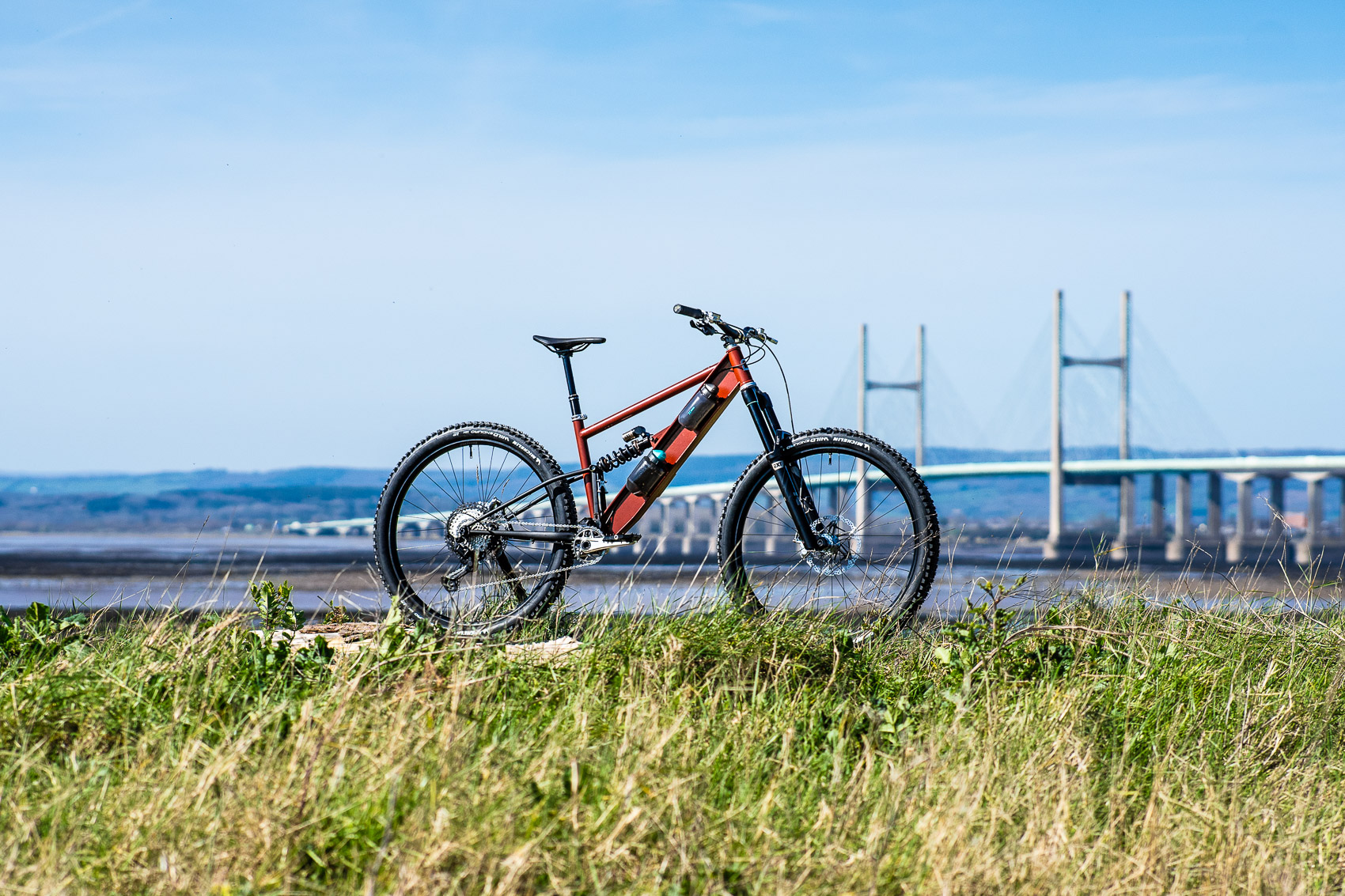
Mo Weight, Mo Worries. Or Maybe Not?
The mountain bike industry has spent the last thirty years locked in a race to the bottom of the scales. Grams are removed, then milligrams. Carbon fibre is laid in ever more exotic orientations. Press releases arrive weekly boasting of yet another sub-whatever kg trail bike. The weight weenie industrial complex churns on.
And here at Starling, we’ve long been suspicious of it.
“The industry’s obsession with weight just doesn’t hold up scientifically,” says Joe McEwan, founder and the man who has to explain this bike to his accountant.
“The impact of a few hundred grams on your riding is much smaller than marketing wants you to believe. We’ve written about this in the past and the numbers don’t lie, they mostly say you’re mostly just spending money.”
The evidence has been building from an unexpected direction. Top downhill teams have been quietly testing weighted bikes. And anyone who has spent time aboard an e-bike will have noticed something: the extra mass does something to the way the bike sits in rough terrain. More planted. More composed. Harder to upset.
It turns out there might be some physics behind this.
The Physics Bit (Stay With It)
Here’s the scenario that kept Joe up at night. A skilled mountain biker, threading through a rock garden at pace, has learned to unweight the bike, shifting their bodyweight to let the suspension do its job. It’s a core skill. It’s the first lesson we learn as riders and what separates the good from the great.
The problem is what happens next. The moment you unweight, the bike is essentially on its own, bouncing through whatever chaos the trail has thrown at it. A light bike, unweighted, becomes a pinball. A heavier bike has more inertia. It resists the chaos, keeps its line, and is actually in a better state for you to land back on.
“When the bike is unweighted, it’s essentially riding itself,” Joe explains. “Adding mass has the most benefit at exactly that moment. We’re very good as riders at unweighting bikes through rough sections, but this just leaves the bike bouncing around underneath you. To keep it stable, you need to load both ends of the bike, so the sprung-to-unsprung ratio is as high as possible at both the front and rear.”
This is where the placement of that extra mass becomes interesting. Putting it at the bottom bracket, Big Bike Industry’s default logic, adds rotating weight right where the rider already stands. You’ve already got 80kgish of human there; adding more to the same point achieves relatively little in terms of increasing the bike’s rotational resistance to upset.
“In an ideal world,” he admits, “you’d put the weight at the ends of two long rods to maximise the rotational inertia of the bike, resisting suspension movement and keeping everything composed. But that’s just not practical.” He pauses. “Maybe that’s something for an April Fools project one day.”
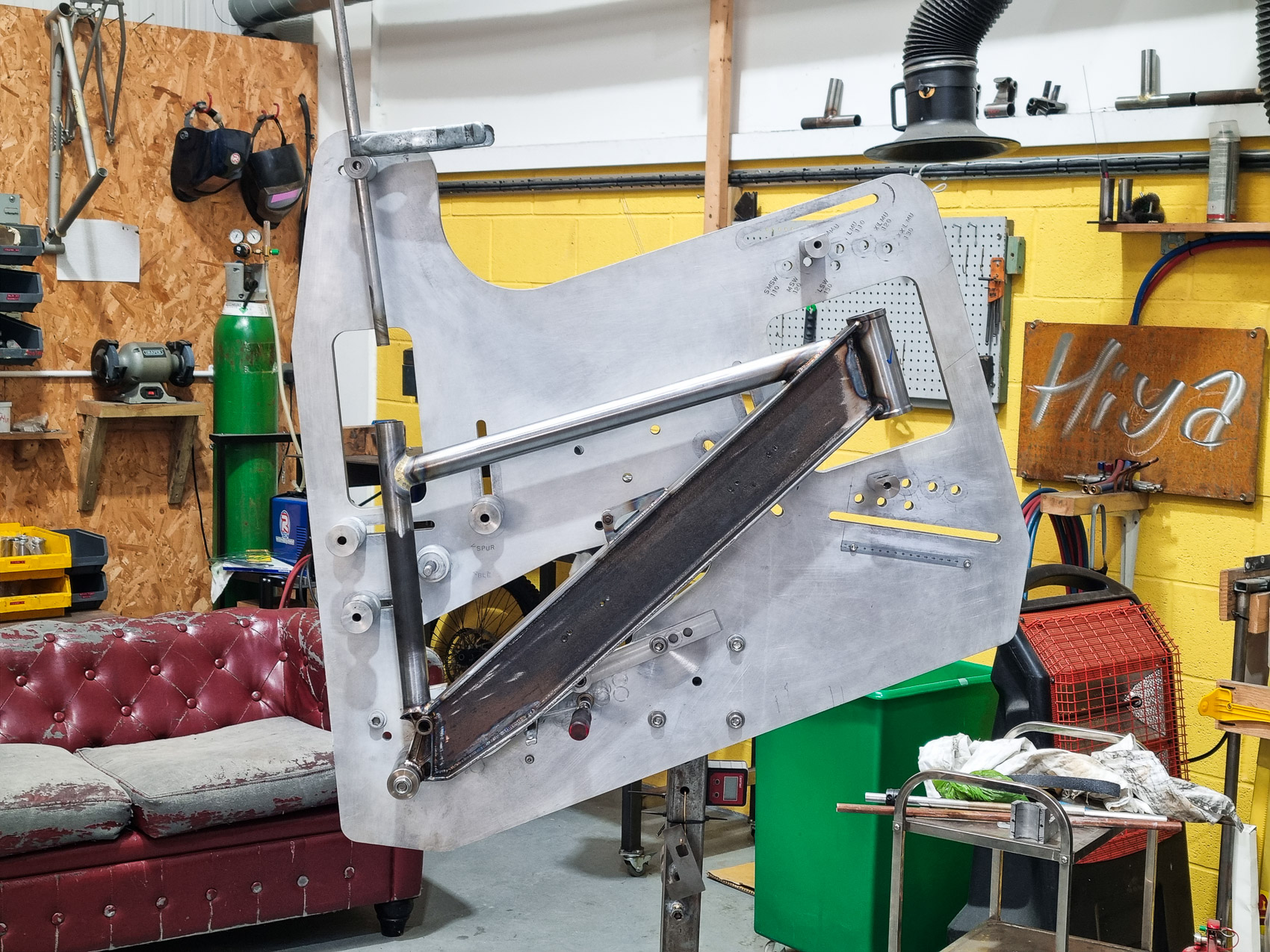
The next best option: spread the additional mass along the downtube, where it contributes proportionally to the stability of both ends of the bike.
Why an I-beam?
This is where things get genuinely nerdy. If you want to add mass to a downtube, the obvious solution is a solid steel tube. Simple to source, easy to weld, structurally overbuilt. Job done.
Except it wouldn’t ride like a Starling.
Ride feel has always been central to what these bikes are. The flex characteristics of steel, that particular compliance that no carbon engineer has ever quite replicated convincingly, is no accident. It’s the product of careful section selection and geometry. We didn’t want to just make a bike that was heavy; we wanted a bike that rode like a Starling and weighed absolutely loads.

The key parameter here is torsional stiffness. Specifically, the torsional constant, J, which is proportional to the enclosed area of a given cross-section. Joe ran the numbers for three options.
Section Torsional Constant (J)
- Current Starling downtube 47,403 mm⁴
- Solid steel downtube 206,870 mm⁴
- I-beam 28,500 mm⁴
“A solid steel tube would be an easier solution for manufacture,” he concedes, “but it would result in a much stiffer frame, and as we know, ride feel is super important to us. The I-beam, even though it contains dramatically more material, actually gives us a torsional stiffness much closer to our current bike than a solid tube would.”
The geometry of the I-beam works in Starling’s favour precisely because it has so little enclosed area, the web connecting the two flanges doesn’t enclose any cross-sectional space in the way a hollow tube would. You get the mass, without the rigidity penalty.
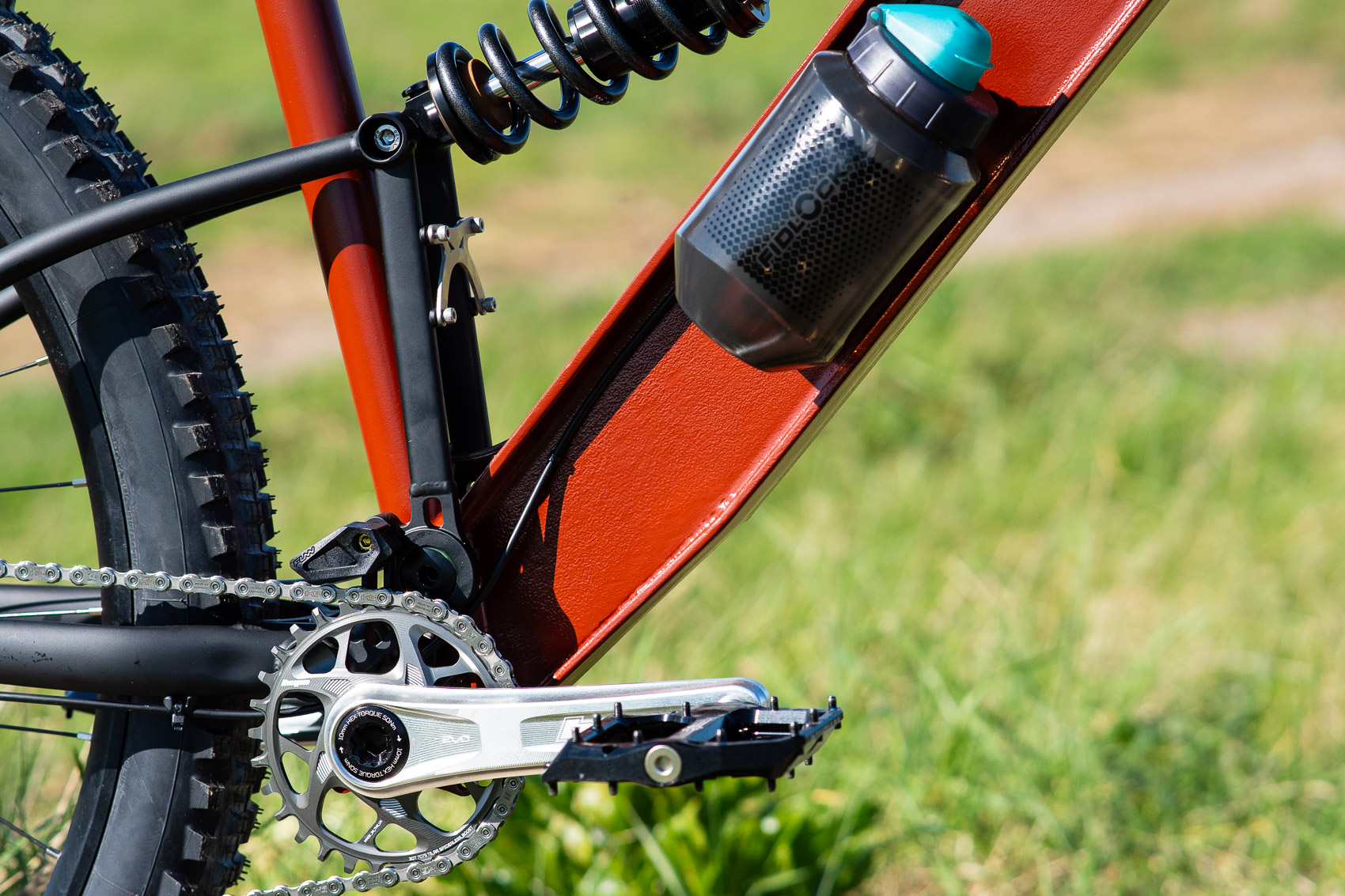
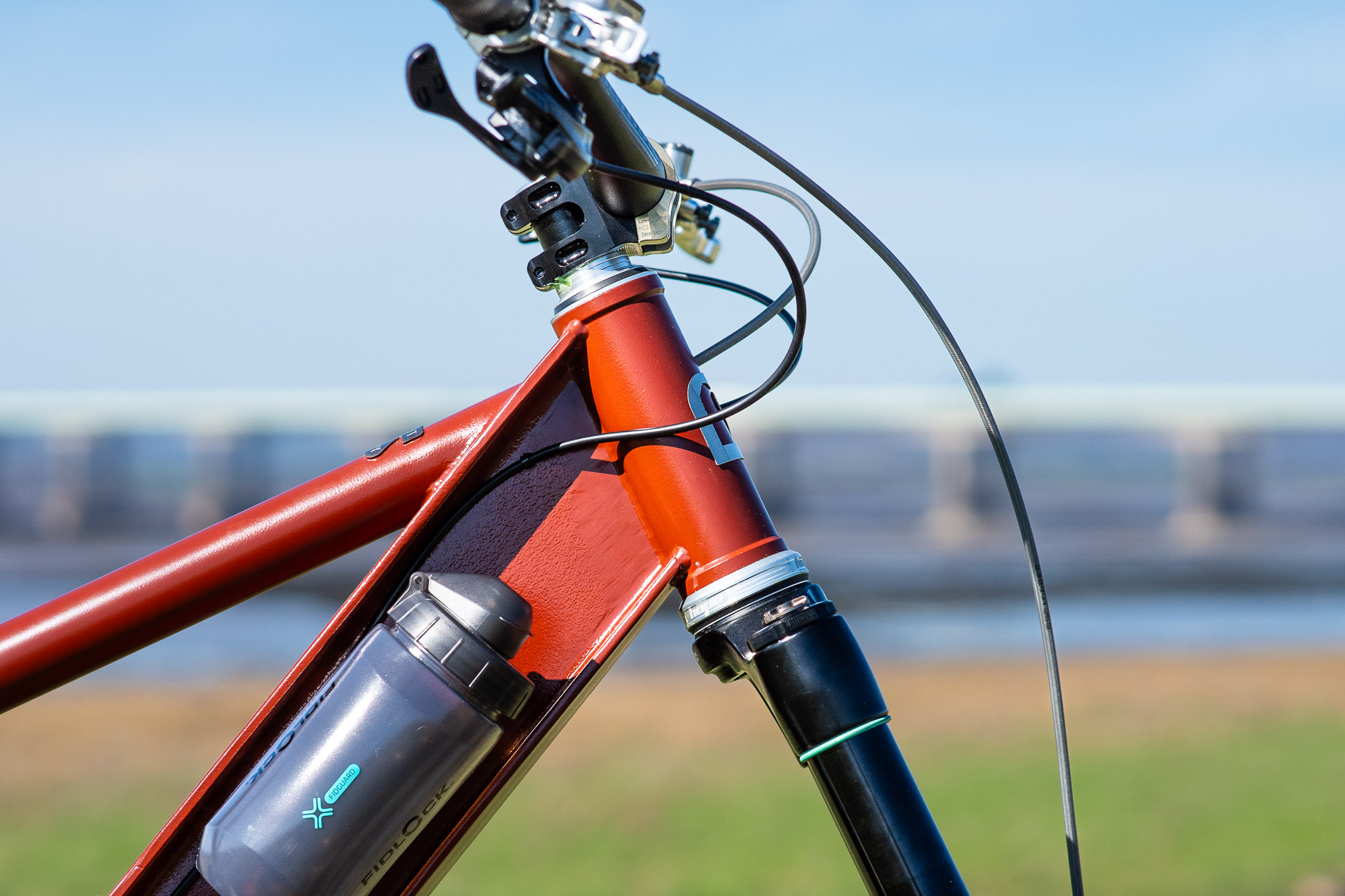
There is, happily, a further benefit. The flanges of an I-beam offer a natural platform for the integration of multiple bottle bosses along the full length of the downtube. This allows not only the carriage of additional ballast, but the fine-tuning of its distribution, shifting the weight balance between front and rear axle with the addition or removal of a bottle.
And there’s one final detail that sounds like it came from a Pinkbike comments section but turns out to have genuine merit: fizzy water.
The movement of carbonated liquid inside a bottle acts, in a small but measurable way, as a mass damper. The collapsing bubbles absorb the kinetic energy of the water’s movement, reducing the pendulum effect of the sloshing mass. All about those marginal gains.
IBEEM Technology: What It Actually Means
IBEEM means I-beam Enhanced Engineering to the MAX
This is Starling’s proprietary framework for harnessing structural steelwork in a full-suspension mountain bike context. It encompasses the I-beam downtube geometry, the multi-boss ballast integration system, and the carbonated mass-damper water delivery interface (bottle cage, two of them, standard 64mm thread).
The prototype was fabricated in-house in Bristol, which is perhaps the most Starling thing about this entire project. The workshop that hand-builds frame after frame of elegant, considered, precision-engineered steel bicycles also, apparently, has the tooling to weld a reclaimed structural beam into a functioning bike in short order.
How Does It Actually Ride?
“As expected, the additional 7kg from the I-beam adds genuine stability and grip to the bike,”
“Most noticeably when you’re trying to float over large rough sections, rock gardens, roots, that kind of thing. You leave them fast and composed, ready for whatever’s coming next. The bike doesn’t get knocked off course the way a lighter bike would.”
The sensation is of a bike that simply refuses to be wrong. Where a conventional trail bike might skip and deflect over successive high-speed impacts, the Girder tracks through. The additional rotational inertia does exactly what the physics predicted it would.
“And the uphill isn’t as much harder as everyone who hasn’t tried it will insist,” he adds, pre-empting the response from the comments section. “If you’re an 80kg rider with 20kg of bike and kit – a 100kg system – adding 7kg from the I-beam is a 7% increase in system mass. But your climbing performance doesn’t get 7% worse, because air resistance, rolling resistance, and mechanical drivetrain losses are all independent of weight and actually account for far more of the effort at typical trail speeds. The best analogy I can give is going from a single-ply tyre to a dual-ply Enduro tyre. You notice it. You don’t suffer for it.”
There is, Joe acknowledges, one genuine negative: “You really don’t want to do a big hike-a-bike with the extra weight. You’ll do your back in”.
Can I Buy One?
The Girder is a prototype and a proof of concept. This isn’t a production bike, not yet anyway.
The data from the Tech Journal supports it. The physics stack up. The prototype rode great.
“We have long been cynical of the weight obsession,” McEwan says. “It just doesn’t make scientific sense. The impact isn’t as big as marketing would like you to think. The Girder is the logical conclusion of that argument, taken to its most ridiculous extreme. Which, it turns out, isn’t that ridiculous.”
IBEEM Technology is not, at time of writing, available as an upgrade kit. But never say never.