With a new tread and a new casing, the Maxxis Minion gets its first major update since it was launched all the way back in 2001.
A quarter of a century after Colin Bailey launched the Maxxis Minion DHF to the World, comes a new tread pattern and DH casing, to produce the Maxxis Minion DHX.
Photos by Pete Scullion.
Key features:
- Progressive casing stiffness allows lower pressures
- Improved puncture protection
- More side knob support
- Smooth transition from centre to side knobs
- Comparable weight to previous DH casing
- Dual ply 120 TPI casing
- MaxxGrip rubber compound
- Tubeless Ready
- E50 Rated
- 1525g (29 x 2.5″)
- £79.99 RRP
- Maxxis.com
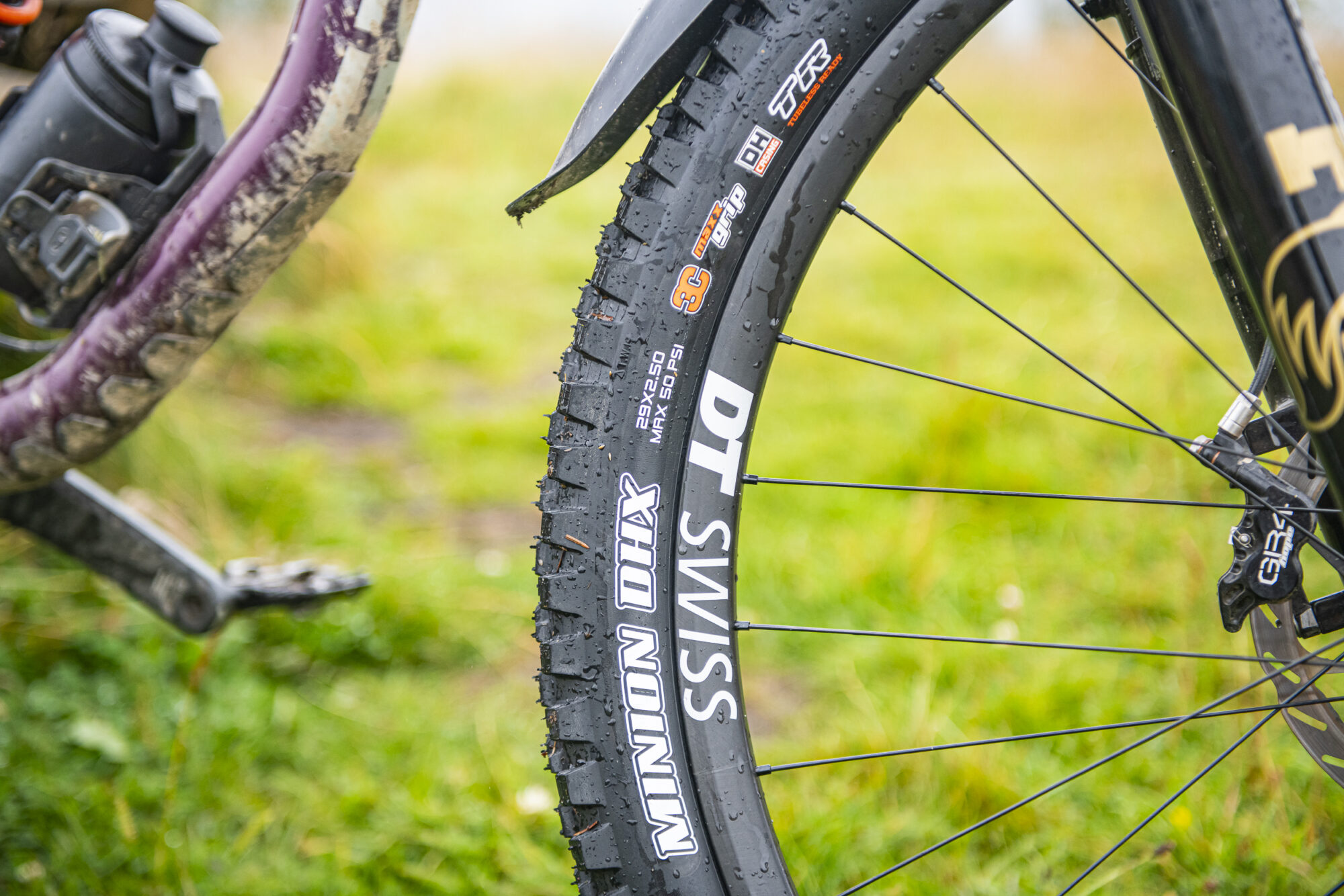
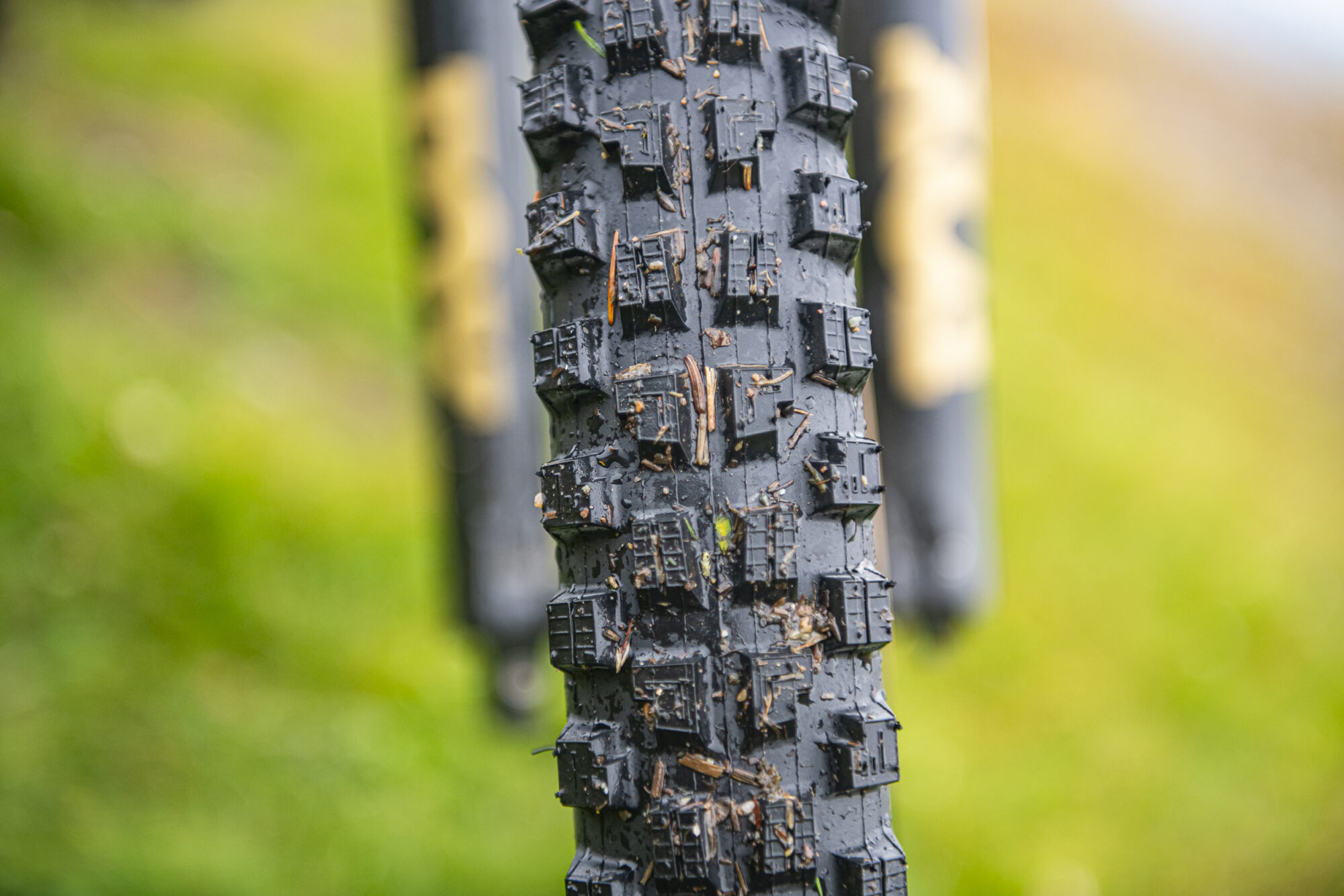
Ladles and jellyspoons, the Maxxis Minion DHX… After two years of development, both the tread pattern and the casing are new. The former looks familiar, but without that yawning gap in between the shoulder and the tread.
The 120tpi casing is now progressive, and Maxxis claim that riders can enjoy lower pressures with similar support and grip. This allows riders to go after performance, rather than just support or rim protection. All this adds up to a tyre that’s aimed at dealing with the high speeds and loads that a modern mountain bike tyre is expected to deal with.
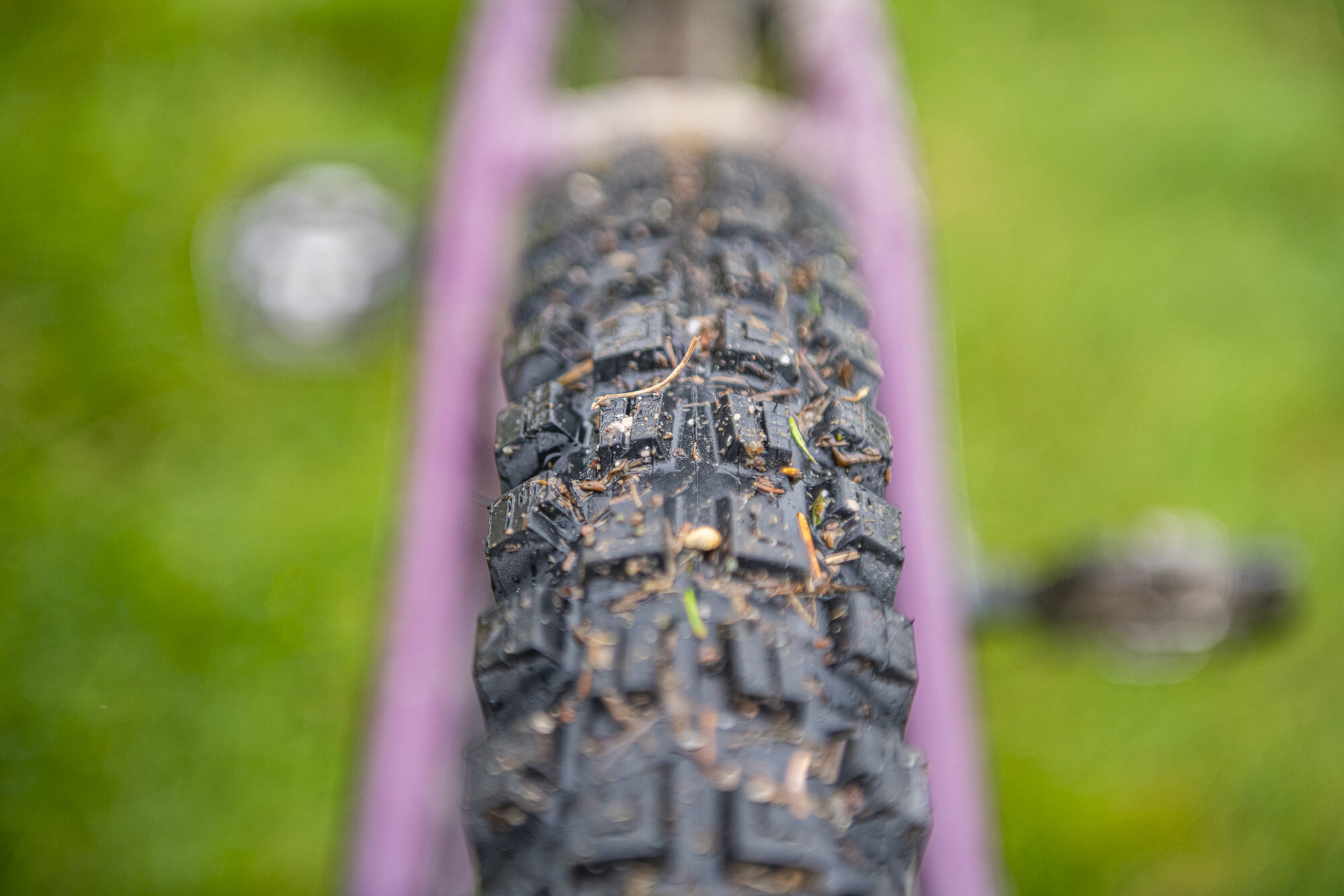
Occupying the middle ground between an Assegai and the Minion DHF, the tread is considerably more sturdy than its predecessor. Plenty of support but also enough give for the tyre to deform to the trail for maximum traction and damping.
Gone is the dual-layer 120tpi carcass (2 x 60tpi), Maxxis now going with the single 120tpi layer with more overlap on the tread, sidewall protection below that and a high-hardness butyl insert against the bead. All this aimed at allowing lower pressures and giving the feel of an insert without the downsides.
I threw a pair of these onto my Saracen Ariel 60 Elite as it had an excellent tyre setup already (High Roller III and Minion DHRII) so that would be the basis against which they would be measured. After weeks of roasting hot weather and dusty trails, the rain came in earnest and the local lap was a greasy affair.
Despite the DH casing and sticky rubber, the DHXs didn’t feel unduly slugglish on the long fire road climb to the top of the hill. They’re far from light at almost 1600g apiece but the DHX will no doubt roll faster than a High Roller III.
Off the top and into the rutted, greasy goodness, I was expecting downhill casings to feel too firm and harsh but I was soon disabused of that notion. Starting at low twenties of psi to make sure they stayed up overnight, I dropped them to the mid-low teens for the downs and was rewarded with nothing but traction and that wonderful note you get when your tyres and suspension just kill the noise coming back from the bike.
Buoyed by the smoothness of the bike, I marched on, ignoring the grease and pushing harder. Despite being labled as a dry tyre, the Minion DHX was clearing nicely and digging in. It also held its own on the rear where I would normally never run a DHF or Assegai unless there was no other option.
For me, the biggest change was that smoother transition from centre-to-tread compared to the DHF, a tyre that will remain in the line up. Almost all of the crashes I will happily forget of late have been when a DHF has given way whilst in that no-man’s land area as you lean it in. The Minion DHX does away with that worry and allows some serious hooliganism on the descents.
Despite me being all of 60kg and riding these on the enduro bike, they didn’t feel out of place and the confidence that they inspired was far beyond the expectation I had set for them. Impressive stuff.