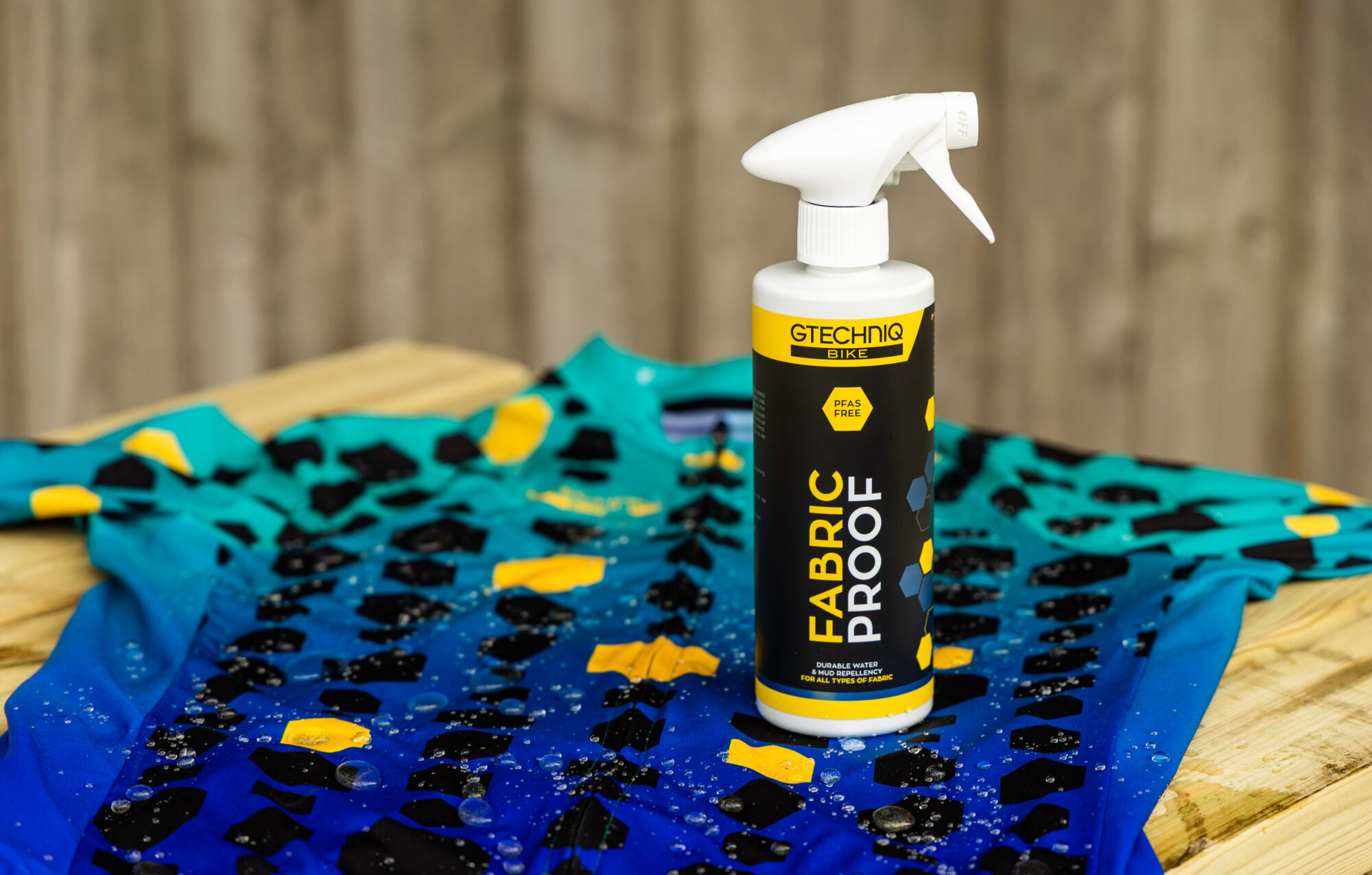
Gtechniq expanded their mountain bike offering to go beyond frame treatments to boost their clothing treatment line in the form of Fabric Proof.
In a World where laws against forever chemicals have seen waterproofing take somewhat of a backwards step, Gtechniq have launched their Fabric Proof that aims to redress the balance.
We had a chat with Lee Kennedy, Gtechniq’s Lead Formulation Chemist, about what you throw into the cauldron when mixing this kind of potion.
What was the impetus for developing a fabric (re)proofer?
We launched the Gtechniq Bike range in 2021. This included our Bike Ceramic Coating and maintenance products, such as Bike Wash and Bike Clean. We wanted to deliver a full bike range that would cover all of our customer’s needs.
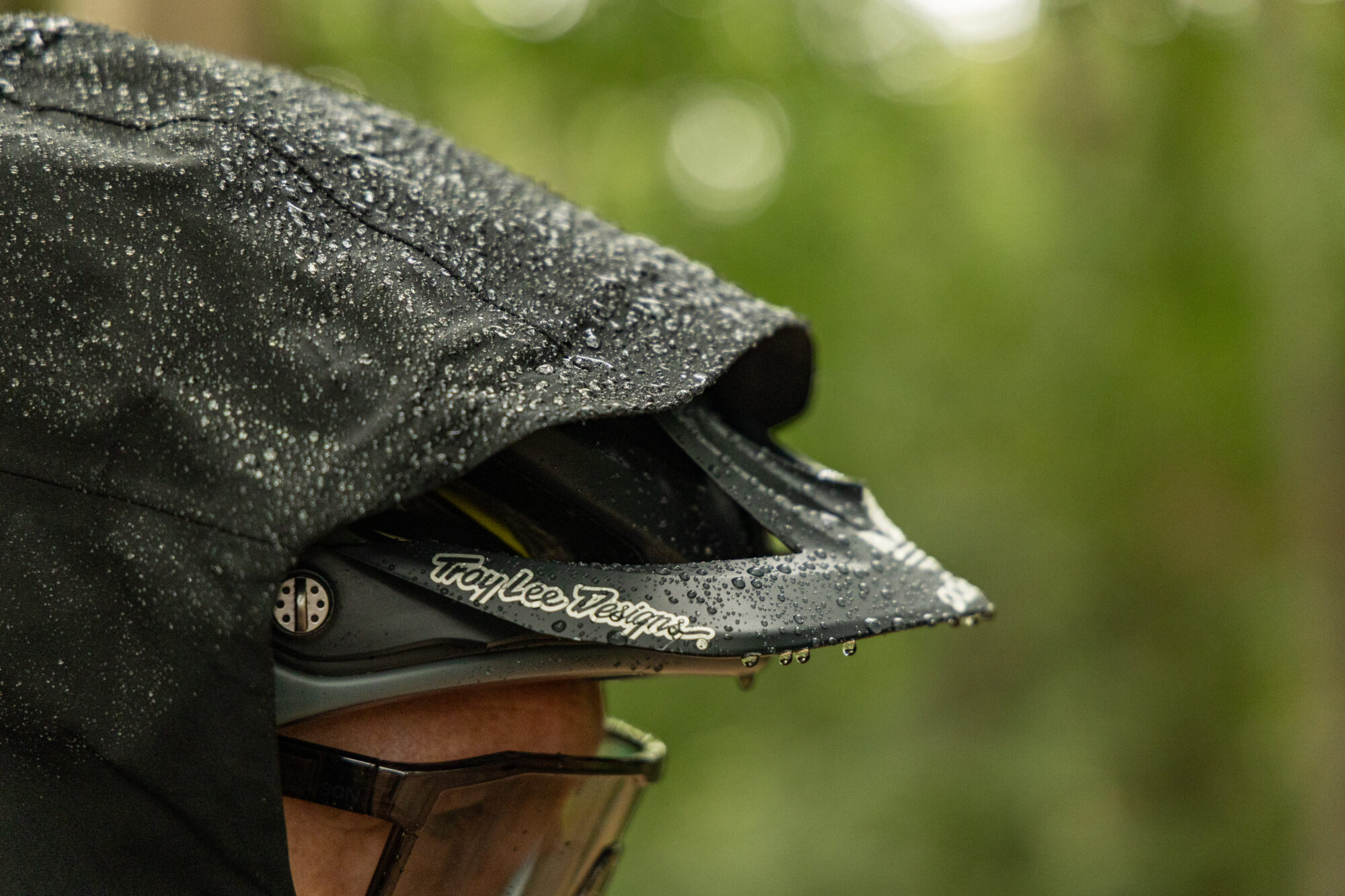
Some of our team were out riding looking down at the bikes, and seeing a better water repellency than the waterproof jackets we were wearing. We saw there was a real gap in the market, especially after the move away from PFAS (forever chemicals) in waterproof gear so we wondered whether there was a way to incorporate our ceramic expertise to DWR (Durable Water Repellent)
Once you’ve made that decision, what happens next?
The first step is to build a design criteria, focusing on what level of performance is required and how this will be measured and validated. Ease of application and user experience are also a huge considerations in the design process. We wanted to outperform what was already on the market, especially around some of the activation factors such as tumble drying garments which we know could lead to damage long-term.
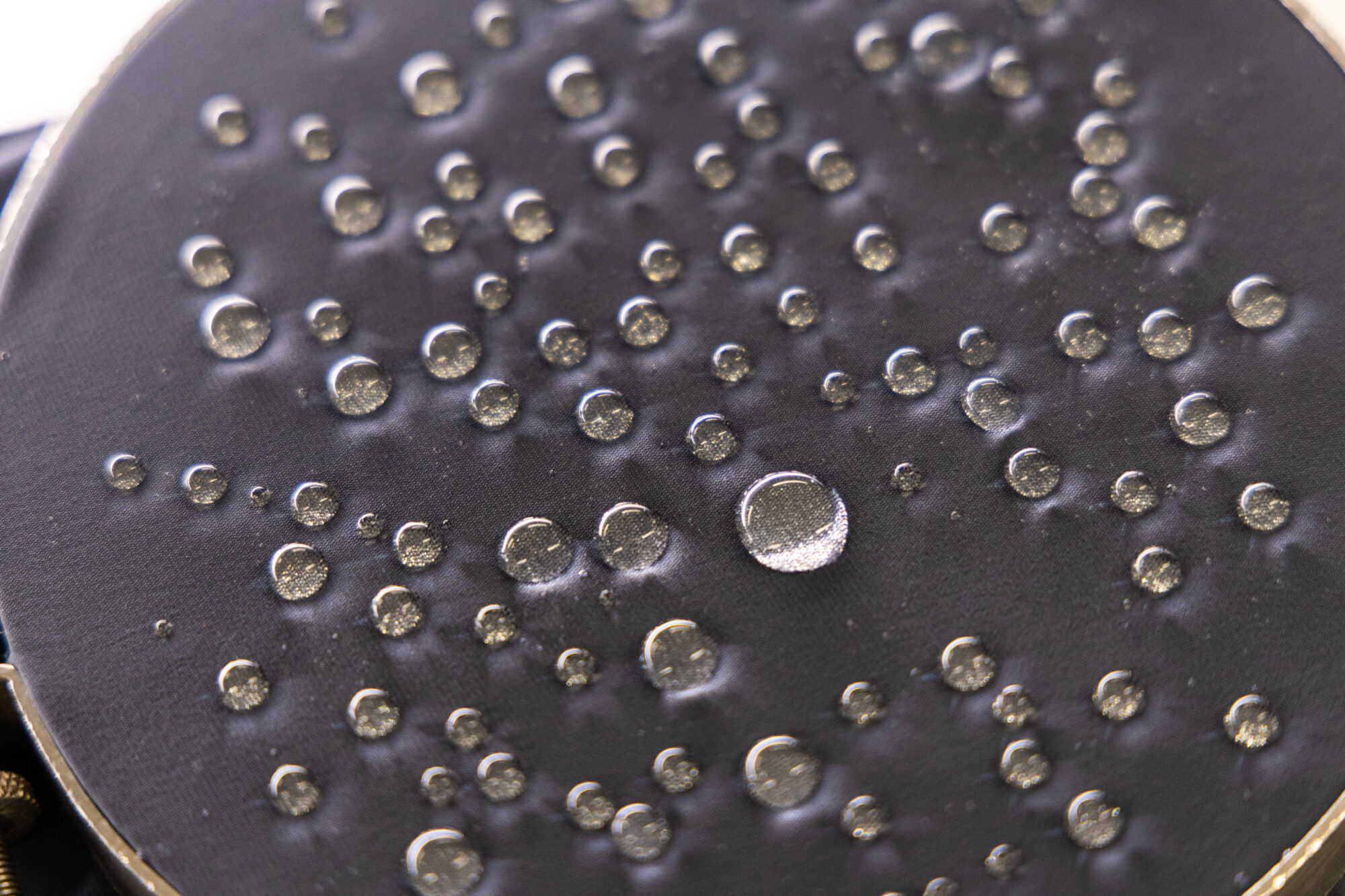
For Fabric Proof, the design criteria was a high level of water repellence and durability. There are existing international test standards from the textiles industry, that can measure this with a high level of correlation to real world performance and customer experience. Using these gives us a far higher confidence level in the actual performance of the product and what the customer will experience. We were able to achieve a Spray rating of 90+ after 10 standard wash cycles, which we know is excellent and exceeds current market standards.
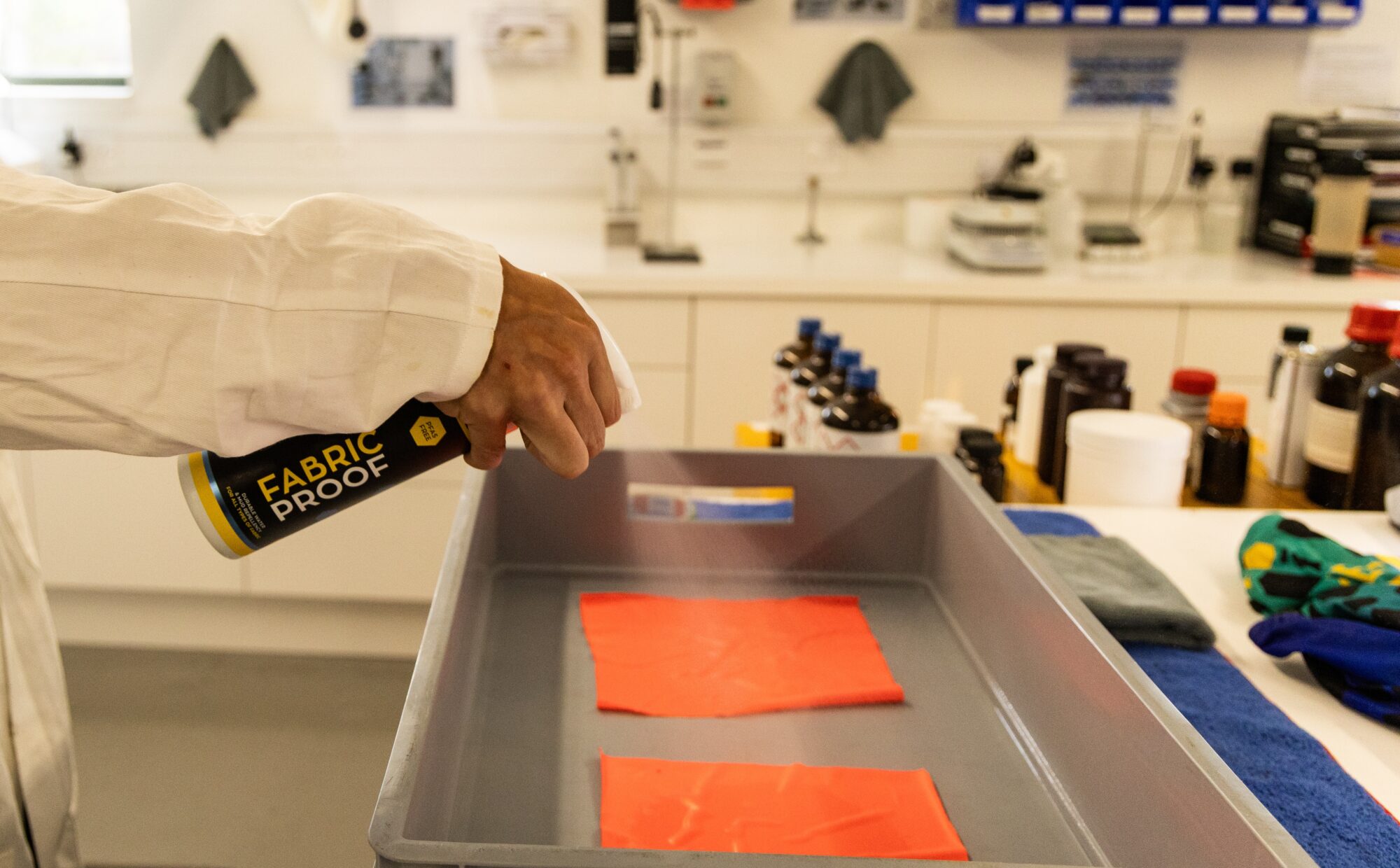
Ease of application was also a high priority. We wanted a product that could be applied to a clean, dry garment, without any pretreatment. It had to be fast drying, with the customer able to wear the garment within 3 hours of application. The drying process needed to be room temperature. Many DWRs require heating (tumble drying, ironing etc.) to fully activate.
However, we work closely with a number of high performance clothing manufacturers who strongly recommend against heating their garments. The product also needed to be compatible with various textiles and the dyes and logos used in this market.
As with all Gtechniq products Fabric Proof is Fluorocarbon free – so no PFAS or “Forever Chemicals” used in the formulation – environmentally friendly.
How many people are involved in the development process and what do they do?
Here at Gtechniq we have a highly collaborative approach to product development. The lab-based team focuses on the technical formulation, chemistry and standardised testing. But that alone doesn’t get a product to market, we work closely with marketing and business development, both in the ideation stages looking at market trends, customer feedback, and potential gaps in our product range.
Procurement are involved through working on supply and pricing, lead times for raw materials and ingredients, building relationships with our suppliers. The operations teams play an important role in scale up and insuring that we are prepared for full production.

Then there’s the product development process were multiple test samples were sent to our customers, distributors and affiliated riders. This is the beta testing stage gate in our development and we use this to further validate our internal testing. We will also work with various 3rd party organisations, experts in textiles, chemical compliance and regulations, anti-microbial and biocidal products regulations (BPR), and dermatological testing.
Overall, there was at least 50 people involved in the different stages of this development to get this to market.
Is it fair to say that fabric treatment is a slightly different world to the paint coatings you have specialised in to date?
From a product point of view, it is a little, but from a chemist’s perspective, no, it’s not that different at all. The technologies behind a fabric treatment and a paint protection coating are remarkably close. Both are based on polysiloxanes which are silicones or ceramic polymers. Both systems are designed bond with the surface and reduce the surface free energy (SFE).
SFE if the amount of energy a surface has available to bond with other components; contaminants, water etc. The lower the SFE the harder it is for anything to bond to the surface. This is exactly the same principle as a non-stick frying pan. There is a bit of nuance between the exact chemistries used but we have a lot of experience and knowledge and this is transferable between the product types.
How many prototype proofers did you go through before you got to the finished product?
I’d like to say we lost count, but everything is recorded. This has been 4 years in the making with 39 unique formulations, 5 different DWR technologies investigated and 2 solvent systems to get to where we are now.
Ah there you go! Producing a DWR (durable water repellent) wasn’t the hard part, the hard bit was hitting are key targets while still making the process easy for the consumer.
The first time we thought we had managed it involved mixing two products together. The result was amazing but once mixed, it had life of about 12 hours. This is clearly no good if you plan on doing one item at a time.
Did you have a eureka moment when you knew you’d got it right?
I think those, “eureka” moments are largely mythical and don’t really happen in any product development process. It is more of a case of making incremental changes and improvements, documenting, testing and validating following a standardised plan, do, check, act, repeat. Now, that all sounds pretty dull but the real satisfaction comes from working in a collaborative environment, as part of a highly skilled, passionate, multidisciplined team to deliver top quality products that our customers feel a real connection with.
Is it a challenge to get a product like this to stand out above the competition?
We know from the testing detailed above where our products sit in the market, and that they fulfil the expectations of our customers. The biggest individual selling point for any of our products, however, is the Gtechniq brand. Our customers have come to expect the highest level of performance and quality from us, and we always make sure we deliver on this.
Favourite moments?
Personally, I always love seeing a new product fully packaged, labelled and ready to hit the market. It’s a visual symbol of all the hard work that everyone has put into the project. By this point we have such a high level of confidence and it’s great to see it ready for launch.
Any disasters?
We hit plenty of snags along the road while developing Fabric Proof; a key raw material was withdrawn due to something called REACH registration, leading to a full reformulation. Certain technologies would only work on certain textiles. One form of chemistry gave fantastic performance but was too reactive and had a short shelf life making the product impractical for commercial use. All these set backs are typical for development. It is important to keep learning and revising until you have developed a robust product that can deliver on all fronts.
What’s next for Gtechniq?
Continuing to innovate, learn and improve. We have lots of exciting product launches in the pipeline so be expecting to see more great products coming to the market very soon.