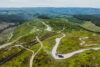
Ridgeline VII heads to the Bolivian Andes for some serious altitude with the big man taking on some major exposure at over 6,000m.
Gee Atherton seventh Ridgeline outing ventures to the Bolivian Andes and a dormant stratovolcano to find the limit.
The next chapter: Gee Atherton takes Ridgeline above 6,300 metres in Bolivia
The search for bigger mountains, new terrain and the limits of what’s possible on a mountain bike has taken Gee Atherton and the Ridgeline crew around the world. Bolivia was another step into the unknown.
From towering rock formations and some of the narrowest, most exposed ridgelines Gee has ridden, to the summit of Parinacota at over 6,300 metres, this latest project had plenty to throw at the team. And for perhaps the first time, they began to find where those limits might lie.
The trip began in La Paz. An outrageously busy city, chaotic streets and a pretty full-on introduction to Bolivia. Fuel shortages were a challenge throughout the trip, with locals queuing for days at petrol stations. The crew had to find alternative ways to source fuel, often collecting it in containers, just to keep the vehicles moving.
From La Paz, the team headed into Lower Ánimas. A bizarre landscape of rock pillars, some over 100 feet high, with narrow gullies running between them. Stunning scenery, but a serious technical challenge on the bike.
Further into Bolivia’s backcountry, high-speed lines around El Alto gave way to an abandoned ski resort at 5,300 metres, helping the team acclimatise ahead of the bigger objective. Along the way, Gee tackled some of his narrowest and most exposed ridgelines to date. Loose terrain, huge exposure and increasingly thin air. Even by Ridgeline standards, this was pretty committing.
But the main objective was still ahead.
Parinacota. Over 6,300 metres above sea level.

First, some testing. The team headed to a glacier to see how the bike would perform on snow, using custom screw-studded Continental Hydrotal tyres Gee had prepared back home.
Grip wasn’t the issue. But soft snow could cause the bike to dig in and the main concern was Gee being able to stop himself sliding endlessly down the volcano. So the crew decided he’d need to be riding with an ice axe, holstered just in case.
Then came Parinacota. The ascent began the night before, with the crew battling high winds, freezing temperatures and the effects of altitude. At this height, even basic tasks become hard work, let alone managing bikes and filming equipment.
The team reached the summit, but it was a humbling experience for everyone involved. It was also an important step in the Ridgeline project. Not just going higher, but finding out what was actually possible in these conditions, and where the limits might be.
The final days of filming brought the team to a huge canyon gap. A familiar feature for anyone who has followed Gee’s projects over the years.
It was here that Gee’s time in Bolivia came to an abrupt end. A misjudgement of speed on the run-in resulted in a heavy crash, bringing filming to a close. The accident and Gee’s subsequent recovery have since been well documented, although the crash itself doesn’t feature in the finished edit.
Ridgeline VIII | Into Bolivia is another step forward for a project that continues to explore the boundaries of mountain biking. Unique terrain, huge physical challenges and a crew willing to find out just how far they can go.
Bolivia may have shown Gee and the team just how close they are getting to that limit.
But the search is far from over.