Pete sits down for a chat with Chance Walters, a deaf rider and racer, to dispel the myths around deafness and riding, as well as how to treat those with deafness.
Hopefully anyone reading this can come away a little better informed about being deaf and riding or racing as a deaf person thanks to our man Chance Walters.
Who is Chance Walters?
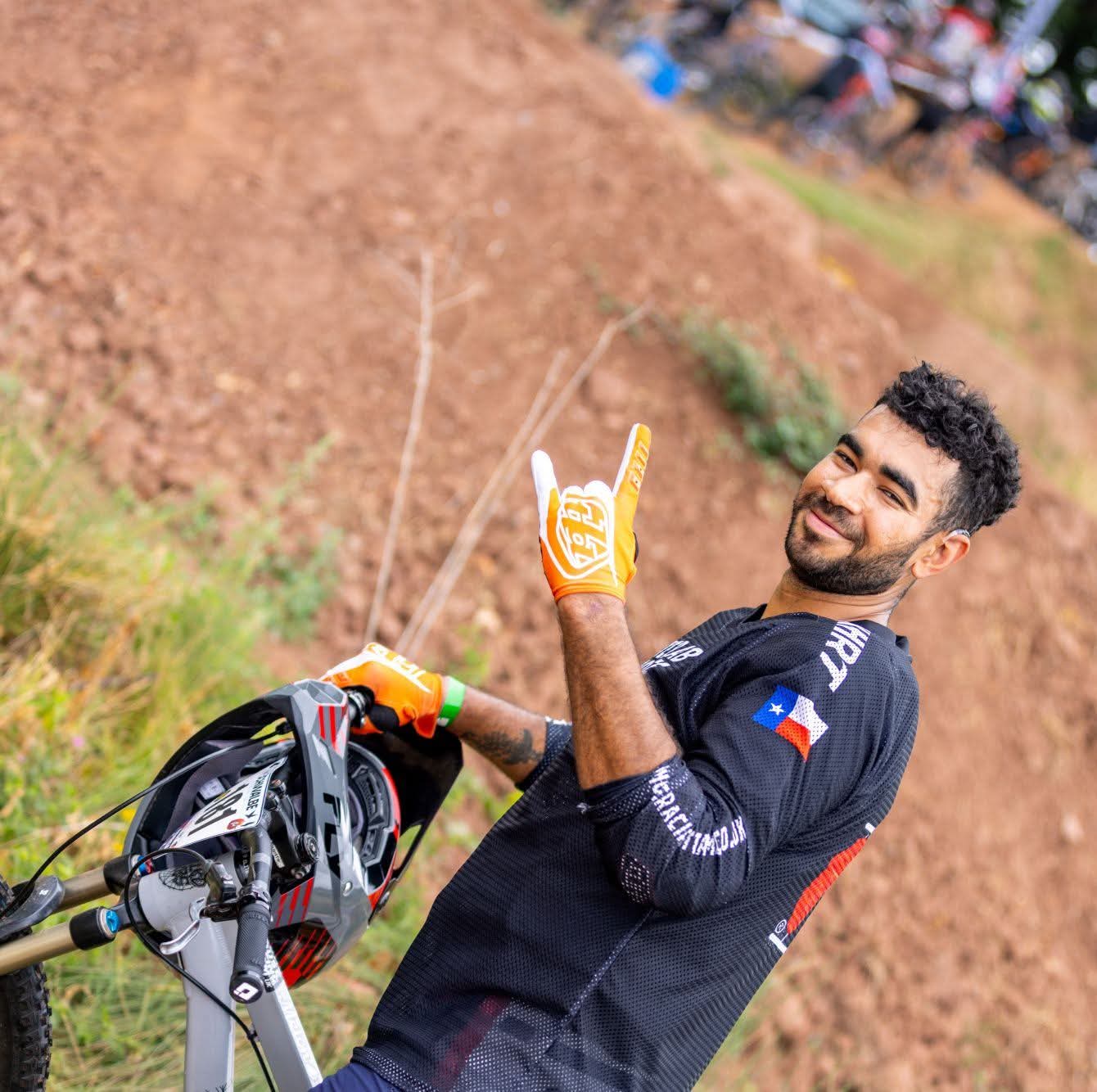
My name is Chance Walters, I’m 28 years old and I’m from Birmingham, UK. I race 4X mountain bikes and have been involved in racing for most of my life.
When I was in primary school, my family moved to Texas, where I spent a large part of my childhood. While I was there, I used American Sign Language (ASL) and really thrived at school. Moving back to the UK at around 13 years old was a much bigger challenge than I expected. I didn’t know enough British Sign Language (BSL) to feel fully part of the deaf community, but I also struggled to communicate easily enough to fit in with hearing people. I spent a lot of my teenage years feeling isolated and unsure where I belonged.
That was when I discovered bikes. Riding became more than just a hobby; it gave me confidence, purpose and, most importantly, a community. Through mountain biking and racing, I found people who accepted me for who I am and friendships that have lasted for years.
Outside of racing, I work as a dry wall and interior systems installer in the construction industry. I also enjoy going to the gym, hiking, camping and spending time outdoors.
My friends would probably describe me as funny, outgoing and passionate about racing. I’ve been racing BMX for 14 years and 4X for the last nine years. Some of my proudest achievements include finishing in the overall top five last season and making my first-ever A Final in 2025 at Twisted Oaks.
Looking ahead, I want to continue pushing myself as a rider and eventually challenge myself at Elite and Pro level. Later this year I’ll be racing the Pro Tour in Italy, which is something I’m really excited about. More than anything, I want to show other deaf people that being deaf doesn’t have to stop you from succeeding in this sport.
One of my biggest motivations comes from a close friend I used to race BMX with who sadly passed away. Every time I race, I think about making him proud.
Although I’ve had a few deaf friends over the years, I often feel caught between the hearing and deaf worlds. Since returning from Texas, I haven’t felt fully part of either community. I don’t use sign language regularly because most of my family and friends are hearing, and I’m far more confident in ASL than BSL. Racing has given me a place where none of that matters.
What’s your background in bikes?
I first learned to ride a bike without stabilisers when I was four years old, despite doctors once telling my parents I would never be able to do something like ride a bike due to my deafness and difficulty with balance. From that moment, I was hooked. I spent every opportunity I could riding after school, exploring, learning new skills and simply enjoying the freedom that bikes gave me. As I’ve got older, that love and passion has only grown stronger.
Unlike many riders, I didn’t come from a cycling family. My older brother has cerebral palsy, so family bike rides weren’t really something we were able to do growing up. Most of my family are football fans, especially my dad, who played football when he was younger. I’m the only one in the family who ended up taking bikes this seriously.
Over time, bikes became much more than a hobby. They keep me active, motivated and focused. I love being outdoors, travelling to races and meeting people through the sport. Without bikes and racing, I think I would have struggled a lot more with loneliness and isolation. They’ve played a huge role in shaping who I am today.
What’s your background in racing?
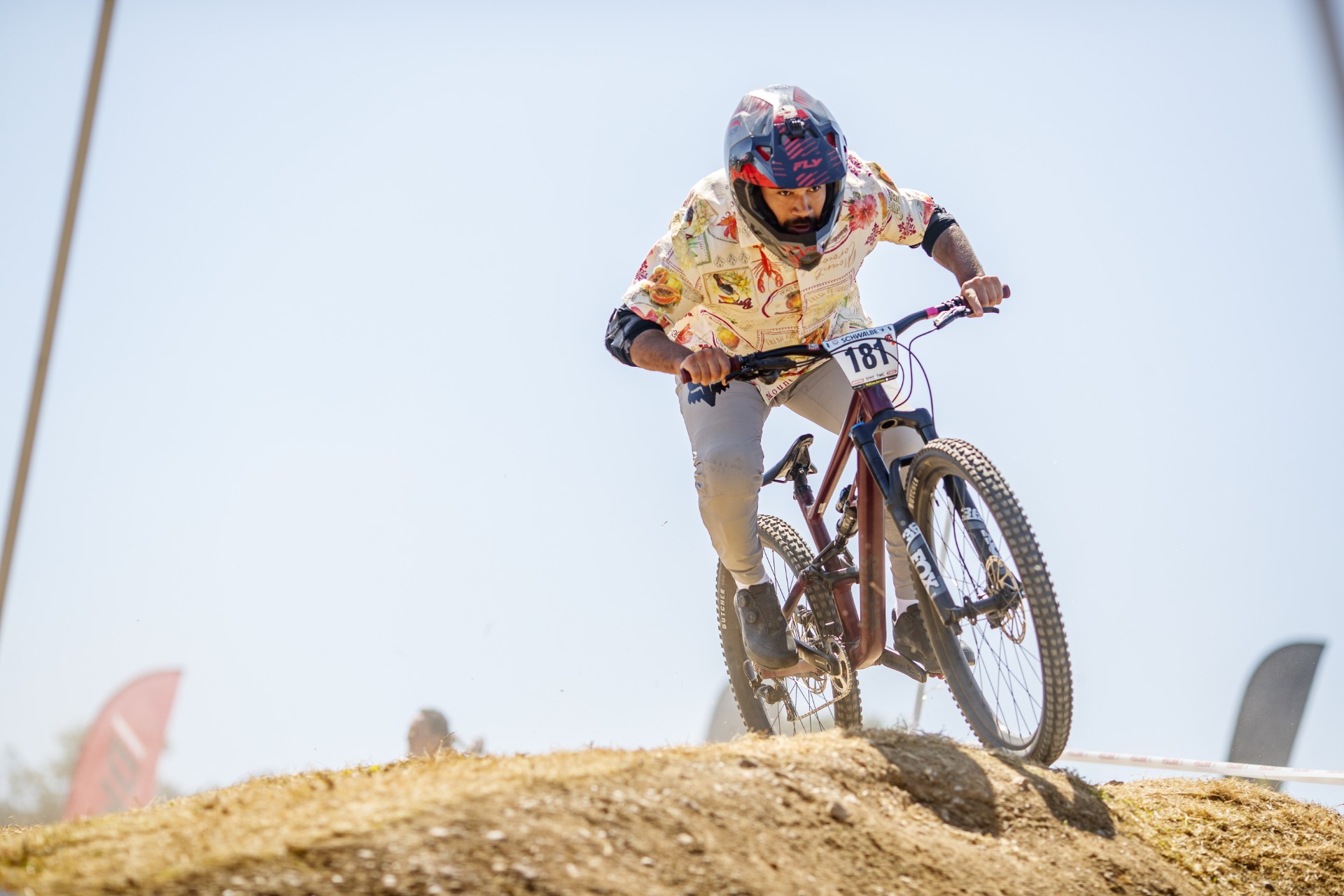
I was a relatively late starter when it came to racing. I began BMX racing at 14 years old and spent the next 14 years competing regionally and nationally. At 19, I was introduced to 4X, and it quickly became my passion.
I entered my first BMX race because I wanted to challenge myself and improve as a rider. I was definitely nervous. The start gate was intimidating because of my balance issues, and the jumps were much bigger than anything I’d ridden before. Despite the nerves, I really enjoyed it and felt like I’d found something I wanted to keep doing.
Being deaf definitely made those first races more intimidating. Hearing the start gate has always been difficult for me, especially in windy conditions. Through my cochlear implant, it can sound like someone blowing into a microphone, making it hard to pick out the actual gate command. I was also worried about not being able to hear riders around me and causing a crash.
I discovered 4X after meeting a couple of riders at my local BMX track. They told me about the sport, and it sounded like something I had to try. I bought a second-hand hardtail, entered a race and completely fell in love with it.
What attracted me to 4X was the atmosphere. It’s competitive, but I feel less pressure to chase results and more encouragement to improve my skills, challenge myself and enjoy racing.
My favourite race venues are Twisted Oaks and Falmouth. Twisted Oaks feels like the perfect blend of BMX and 4X, and it’s where I made my first A Final. Falmouth is another favourite because I love the track layout, and it was where I successfully rode the Pro section for the first time this season after a shaky start at Chicksands.
The reason I’ve stayed in racing for so long is simple: I love it. It gives me purpose, keeps me motivated and constantly pushes me to improve. I also hope that by racing, I can inspire other deaf people to give the sport a try. One day, I’d love to pass that passion on to my own children.
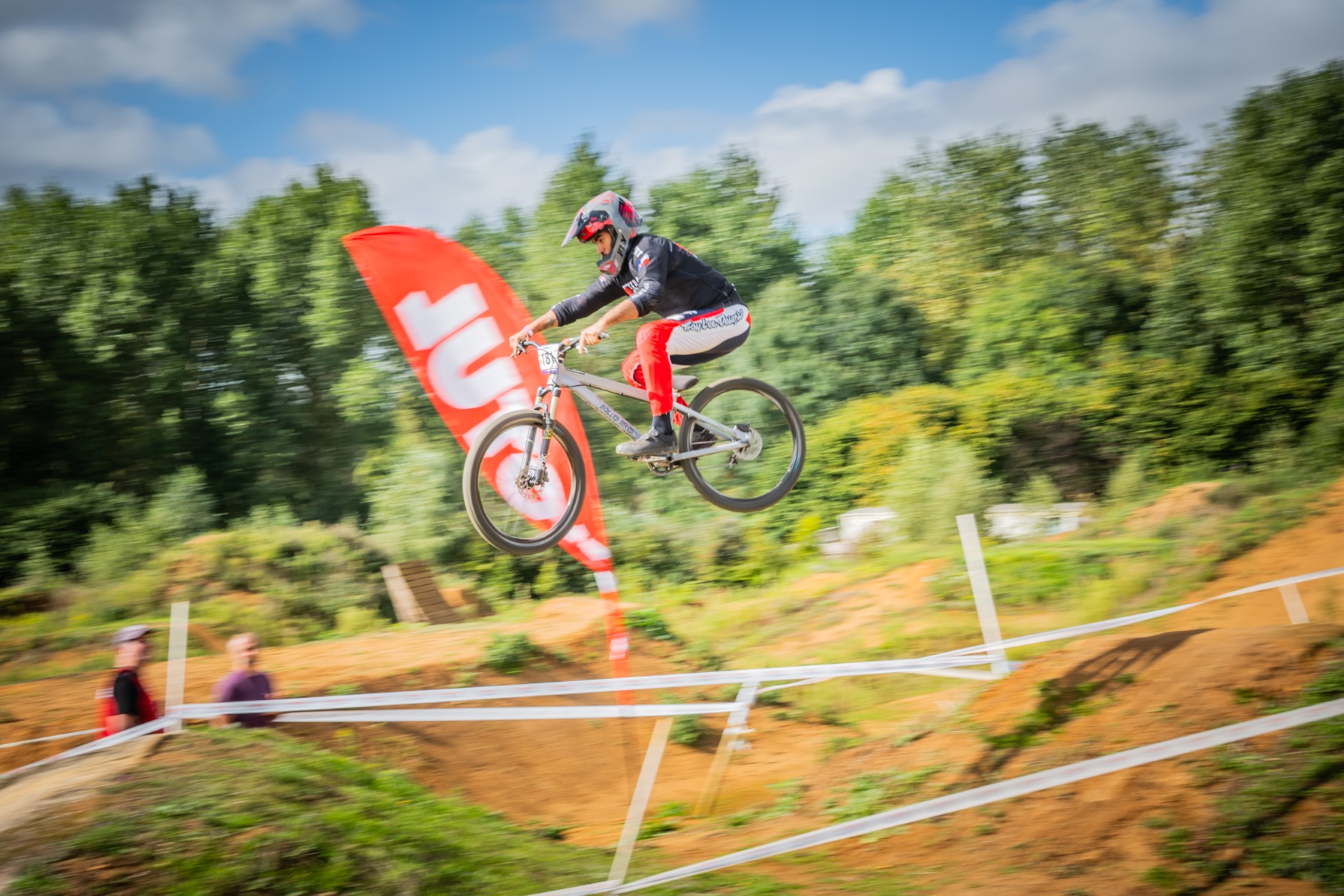
How does being deaf affect your riding?
A lot of people don’t realise that deafness can affect balance because the inner ear plays a major role in maintaining it. For me, that creates a significant challenge in sports like BMX and 4X, where balance, timing and reactions are critical.
The start gate is one of the biggest challenges. If I don’t hear it properly, my reaction can be affected before the race has even started. There are so many extra things I have to think about that most people probably never consider.
In everyday life, communication is often the biggest challenge. In large groups, if lots of people are talking at once, I struggle to follow conversations and can easily miss parts of them. It can be especially isolating when someone says, “It doesn’t matter” or “I’ll tell you later” instead of repeating themselves. Moments like that can make you feel left out.
My speech is also affected by my deafness, so sometimes people struggle to understand me. On top of that, balance issues make me naturally clumsier than most people. No glass is safe in my house!
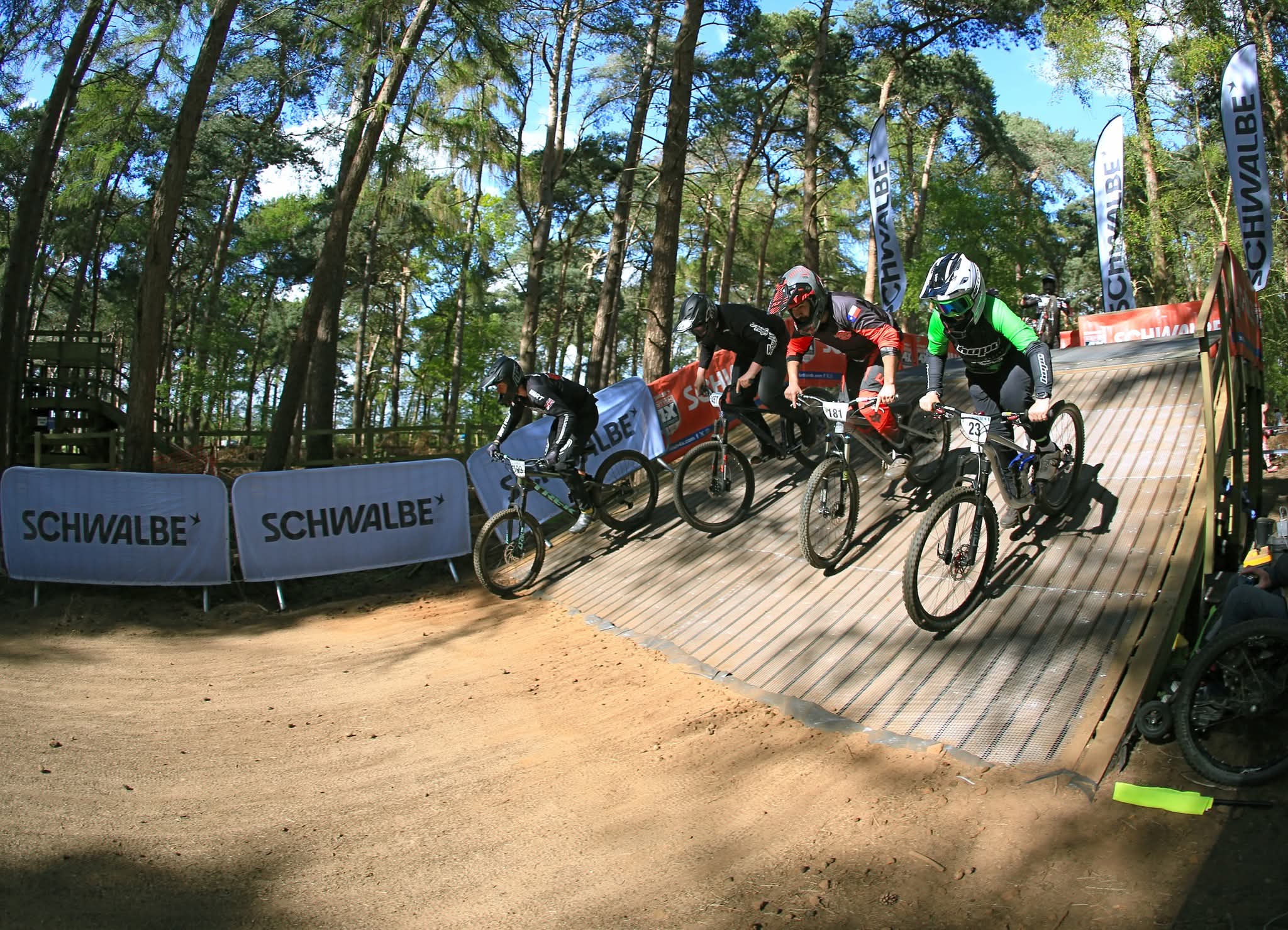
On the bike, I’ve had to adapt my riding style over the years. I rely heavily on visual information and visual cues. At the gate, I’m watching the lights and the riders next to me rather than relying solely on sound. During races, I can’t hear riders behind me, so I have to be constantly aware of where everyone is around me.
One thing I’m always conscious of is accidentally cutting someone up because I haven’t heard them approaching. It means I have to concentrate incredibly hard, not just on the track itself, but also on the positioning of other riders, the conditions and how I’m going to approach certain sections. There’s a lot more going on mentally than people might expect.
What are the challenges of being deaf whilst riding and racing around others?
The biggest challenge is definitely hearing the start gate. Windy conditions can make it even harder because the sound through my cochlear implant becomes distorted, which can affect my timing and reaction.
Another challenge is not being able to hear riders behind me. Hearing riders can often pick up on sounds that tell them where someone is approaching from, but I don’t have that advantage. I need to physically see where other riders are.
Fortunately, race officials have always been understanding and accommodating. They’ve always made sure I receive any important instructions and haven’t missed anything significant because of my hearing.
Most of the communication on race days happens verbally. I speak to other riders the same way hearing people do, and I’ve found that most riders are patient and willing to make sure I understand what’s being said.
Sometimes people simply forget I’m deaf. They might turn away while speaking, cover their mouth or try talking to me in a noisy environment where I can’t follow the conversation.
I think there are some simple changes that could make racing more accessible for deaf athletes, including better visual signage around venues, larger and more visible start gate lights, improved deaf awareness training for officials, riders and spectators, and potentially having officials with sign language knowledge available at larger events.
Have you always had cochlear implants and what are their limitations?
I lost my hearing completely after contracting meningitis as a baby. I received a cochlear implant when I was around one year old and have lived with one ever since.
One of the biggest misconceptions is that cochlear implants restore hearing to normal. They don’t. Everything sounds robotic and electronic compared to natural hearing.
Without my implant, I cannot hear anything at all. Even with it switched on, I only hear a small percentage of what a hearing person would hear. I only have an implant in one ear, and not all of the electrodes could be fitted during surgery, which means my hearing is more limited than many other cochlear implant users.
People often assume shouting will help me understand them, but clear speech is far more important than volume.
Crowded environments can be particularly difficult because all the sounds blend together. Instead of hearing individual conversations, it becomes one wall of noise. That can lead to hearing fatigue, difficulty concentrating and headaches.
I race with my implant because racing without it would be even more challenging. However, they aren’t perfect. Heavy rain can cause problems, and dust can be just as bad. Earlier this season at Chicksands, dust stopped my implant from working properly and I ended up racing several runs with no sound at all until I managed to get it working again.
Are there positives to being deaf?
Absolutely.
Being deaf has made me far more visually aware of my surroundings. I pay close attention to body language, facial expressions and visual details that many people probably overlook. It has also made me very good at lip reading.
It has taught me resilience and determination. There have been times when being deaf has made life harder, but overcoming those challenges has made me stronger and more focused. I’m grateful that the meningitis I had as a baby didn’t leave me with more severe complications.
In racing, I think it helps me stay focused. Because I know I can’t rely on hearing, I’m constantly paying attention to what’s happening around me. If I lose concentration for even a second, the consequences can be much bigger.
Being deaf has also shaped me as a person. While it has sometimes affected my confidence, particularly when I’ve been treated differently because of it, I’m learning to be proud of who I am and what I’ve achieved. Looking back, I’m proud of everything I’ve overcome and the person it has helped me become.
What are the common misconceptions people have about deafness?
One of the most common misconceptions is that speaking louder will somehow solve the problem. No matter how loudly someone shouts, I’m still deaf. What helps most is speaking clearly and facing me.
Another common issue is people covering their mouths or turning away while they talk. Because I rely heavily on lip reading, that can make communication almost impossible.
Many people also assume that all deaf people use sign language. That isn’t true. Deafness exists on a spectrum, and every deaf person’s experience is different. Some people use sign language as their primary form of communication, some use speech, and many use a combination of both.
Personally, I rarely use sign language because my family and friends are hearing, and growing up around hearing people helped me develop my speech and verbal communication skills.
People also often assume that cochlear implants completely fix hearing. They don’t. I still face significant communication challenges every day, and the sounds I hear are very different from natural hearing.
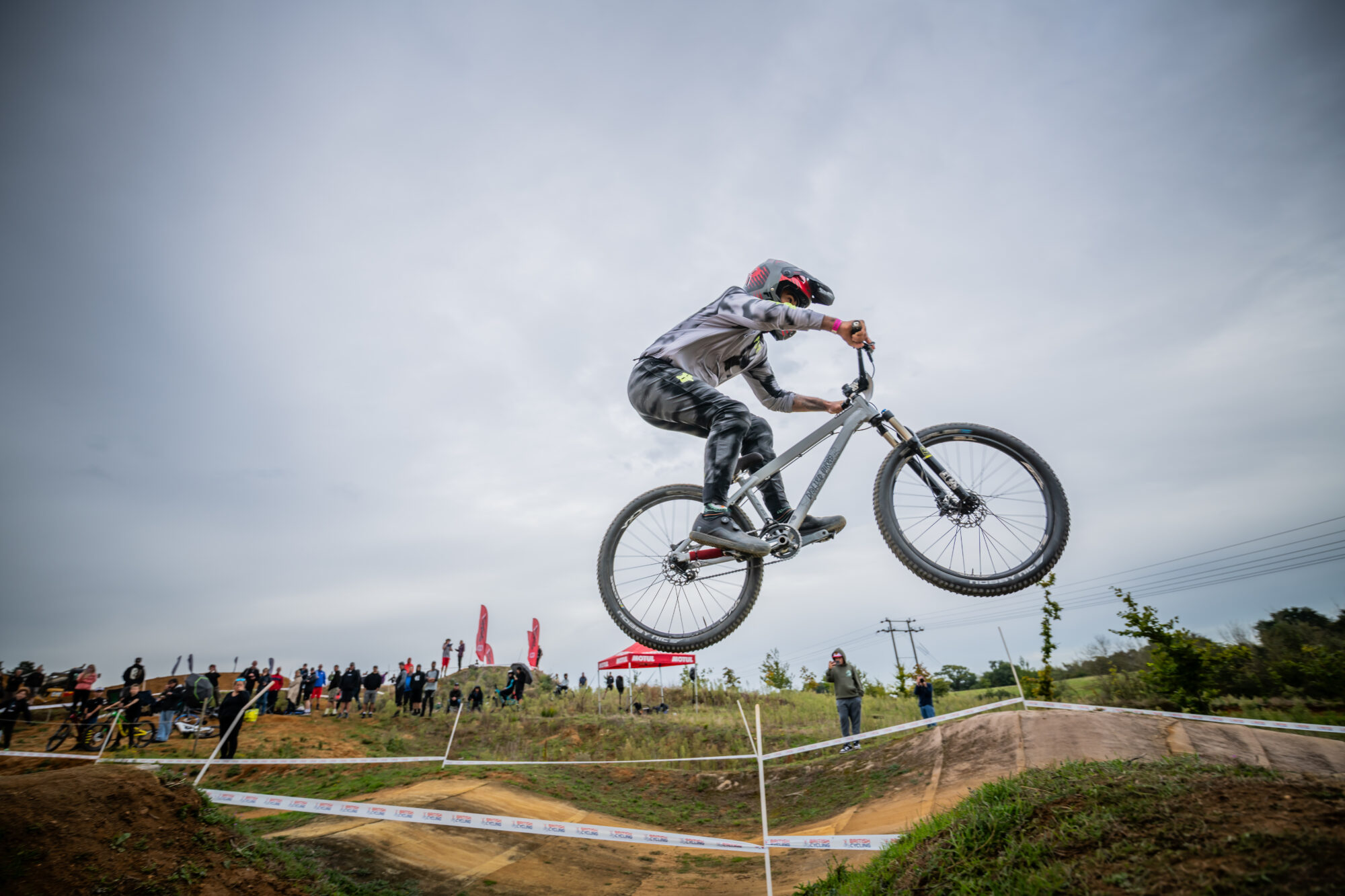
Another misconception is that deaf people can’t participate in extreme sports. While deafness creates additional challenges, it doesn’t stop people from competing at a high level. It simply means we often have to work harder and adapt differently.
More than anything, I’d like hearing people to understand that deaf people want the same thing everyone else does; to be included, involved and treated as equals.
What BSL signs should everyone learn?
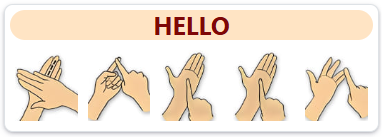
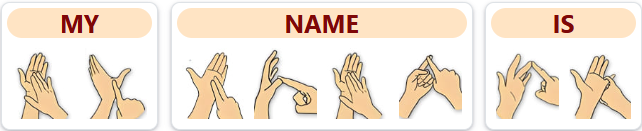
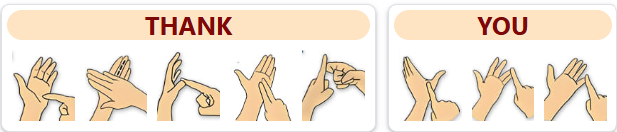
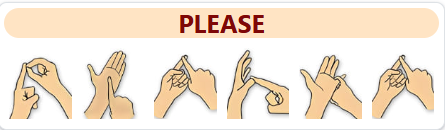
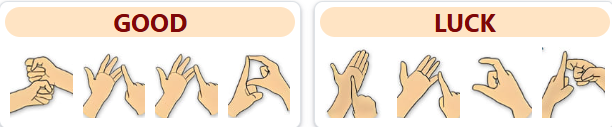
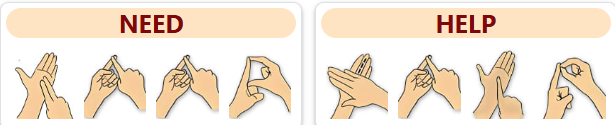
If everyone learned a few simple signs, it would make communication much easier and help deaf people feel more included. Some useful signs include:
Hello
How are you?

My name is…
Nice to meet you

Thank you
Please
Good luck
Are you okay?

Need help?
How was your race?

If someone came up to me on a race day and only knew three signs, the three that would mean the most would be: “Hello”, “Chance”, and “How was your race?”
It’s a small effort, but those simple signs can make a huge difference and show someone that you’ve taken the time to connect with them.