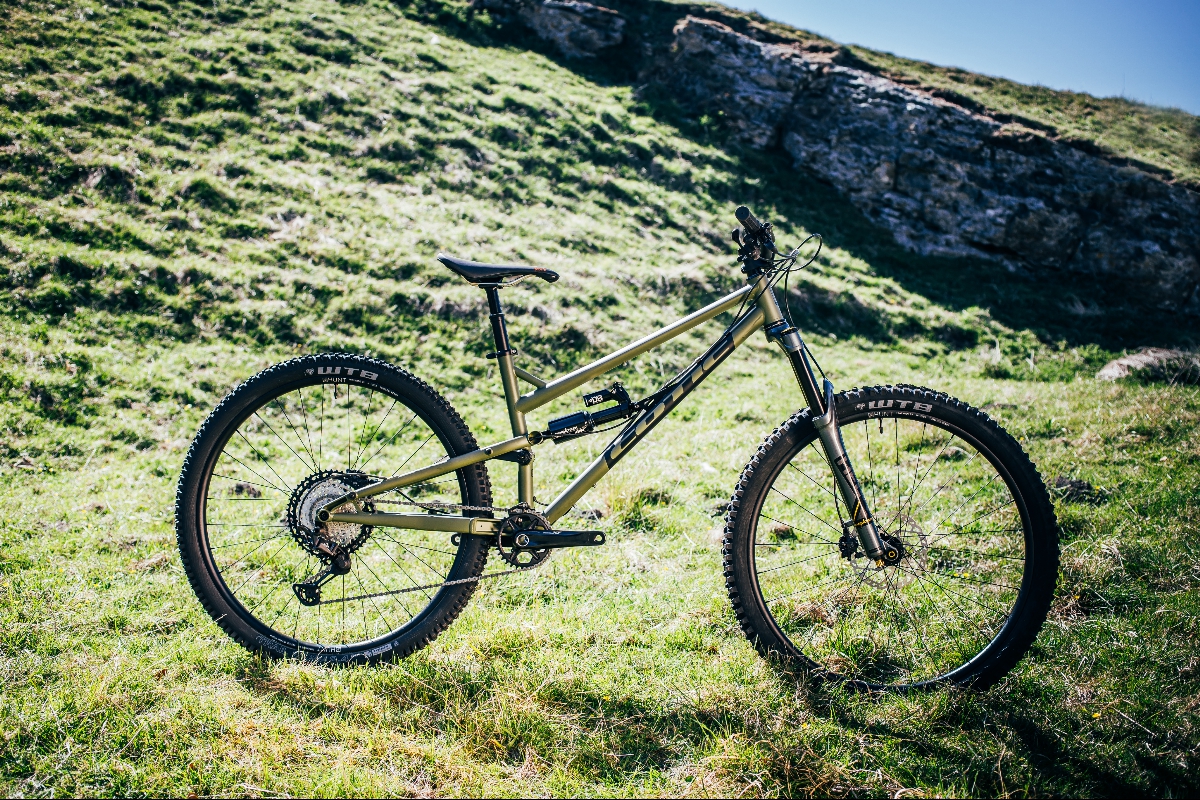
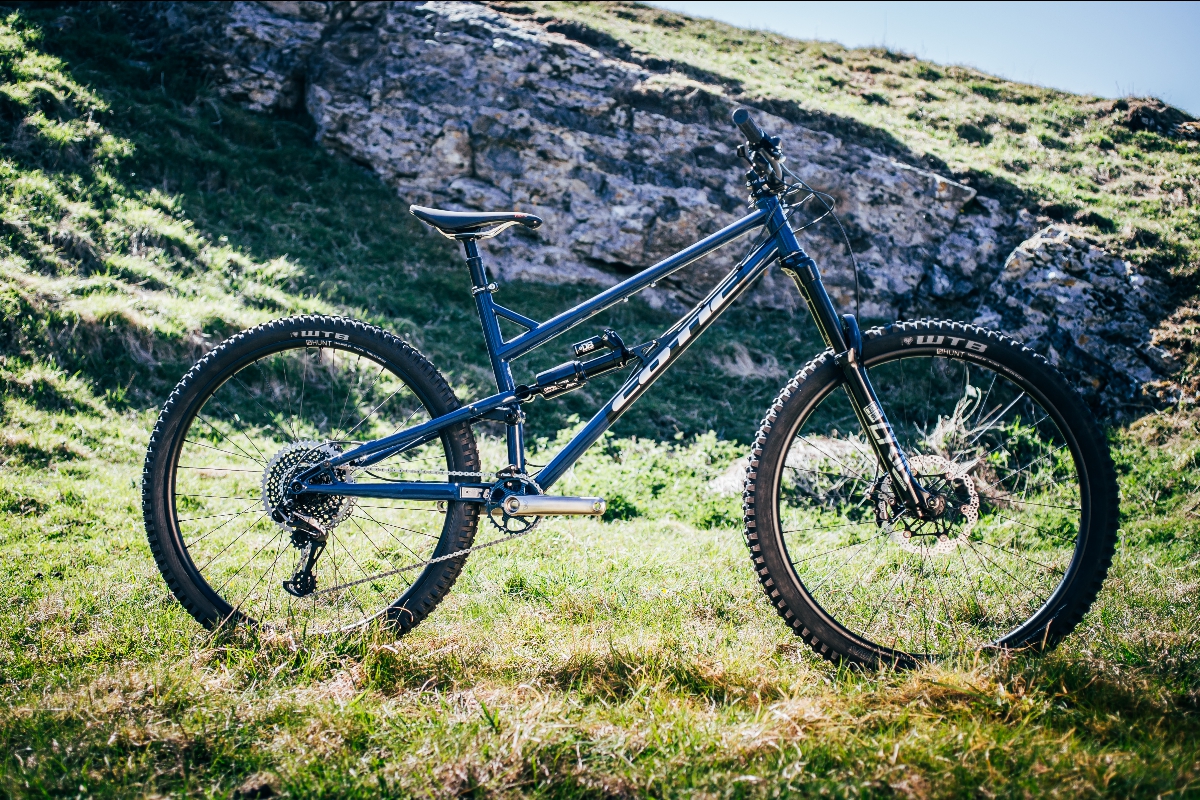
Cotic launched their third generation RocketMAX featuring increased travel and tweaked suspension to broaden the performance window.
Pete had a quick catch up with Cotic’s main man Cy Turner to chat how the third generation RocketMAX emerged from the Cotic stable.


What was the impetus for updating the RocketMAX?
We were getting feedback from Cane Creek that the industry was making a big swing to metric sized shocks, and Rock Shox only make metric sized Deluxe shocks, for example. The Gen2 bike used a 200×57, so we started looking at the kinematics for a 230 metric shock.
From developing the other new Droplink bikes (FlareMAX Gen3 and Rocket Gen4) we were finding that reducing the progression rate and leverage ratio a little really helped open up the tuning window for riders at the lower and higher end of the weight scales.
They are still very progressive compared to a lot of other bikes, but less than the previous generation bikes. The new kinematics and shock size combined with the big can air shock and the 10mm bump in travel give people the option to run a slightly plusher, softer edged feel which is more effective in high speed, rocky stuff, but by adding volume spacers you can get something of the punchier feel of the Gen2 bike if you ride steeper more natural terrain. More options for riders, better in more situations.
The tweaks to the tubeset and geometry were subtle, with the seat angle getting slightly steeper to work with the slightly lower progression rate. With less progression, you get less support for the rider as the weight transfers back on climbs, so we pushed the rider forward a little to offset this effect. It’s pretty subtle, to the point where I could simulate it on my Gen2 bike by moving the saddle forward 12mm.
The HD down tube grew out of the Rocket Gen4 project and looking to make the bike a little tougher at the extremes. People can get pretty wild on these bikes, so once we had the new tube developed for the Rocket, it was obvious to roll it onto the RocketMAX too when we managed to keep the weight the same, but improve the toughness and stiffness.
Once you’ve made that decision, what happens next?
Well, once the computer modelling is done and I’m at a point where I think it’s about right, it’s time to ride test. Test, test , test. Luckily because of the bolt on shock mount construction we use and the great relationship we have with Cane Creek I was able to test the new leverage curves and shock tunes by moving the shock mount on the frame and using a custom sized shock Cane Creek built for me with the correct stroke but a random length to fit the frame. It’s only a few mm different from the standard size, so it worked without needing to build dedicated prototypes.
Has making frames in the UK helped in the prototype stage?
For this project, not so much, because the aim was to maintain the dynamic geometry we loved from the Gen2 bike, but with the new kinematics, so as I explained above, the most valuable asset was our close relationship with Cane Creek for getting the shock built. What the UK advantage has been is moving fast. I only signed the project off at the end of January, and here we are in May with bikes on sale.

How did you know when you’d got the changes right?
It’s a feel thing. Back to back testing with a stock Gen2 bike, and the RocketMAX is my main bike so I know it well. Once I thought I had a shock tune and kinematic I was happy with, I worked it back onto the other sizes using CAD, and then Sam ran the test shock on his RocketMAX for a few weeks too.
He runs a small and I run an XL, so if we’re both happy and both getting the same feeling from the bikes, then that’s were we go. As this was an evolution rather than clean sheet of paper, it’s much less intense on the testing and validation side of things.
Did you have to change the way you approached this process due to COVID?
No, because this was all signed off before it hit. The only impact COVID19 has had is that we’re a couple of weeks later on the launch than we were hoping for. The original aim was to launch at Sea Otter a couple of weeks ago, but that was going to be tight. Once that was cancelled, and we were in lockdown, it just took longer to build the photo bikes and get them shot. Simple stuff like that really.

How do you go about deciding which specs options to add?
It’s a combination of what we like riding and what the customers want. First and foremost, we don’t sell anything any of us wouldn’t be happy to ride ourselves. If you came and looked at any staff bike, it will have some combination of what we sell on it. We’re big believers in that.
For instance, the addition of SRAM Guide RSC G2 brakes to the options list is because I don’t get on with the lever feel of Shimano, and whilst I previously used Hope brakes, they are a pretty spendy upgrade and I wanted an equivalent priced option to the Shimano XT for riders like me. I’ve been using those brakes for over a year and I think they’re great.
The addition of the Lyrik is the big change. We love Cane Creek suspension, but again, people have preferences for other brands, and once we got into Gold and Platinum builds we were only offering the HELM option. Customer feedback was that some people would like another choice, and the new Lyrik is a really good fork.